String of Bananas Plant (Senecio radicans) Care Indoors, Propagation, Problems & Remedies
Some links in this post may be affiliate links
Senecio radicans also called String of Bananas Plant, String of Fishhooks Plant or Fishhooks Senecio is one of the popular Senecio varieties on account of its pendant thread-like stems on which are tiny leaves shaped like small, green bananas.
The odd shaped leaves is an adaptation to arid conditions and allows for the storage of water while exposing minimum surface area to the dry desert air which greatly reduces water loss.
The fleshy leaves and stems store water, which allows the plant to go for a considerably long period without being watered. String of Bananas Plant among well-liked drought-tolerant plants with low water needs.
String of Fishhooks Plant leaves bear a translucent window that runs the length of the leaf which allows light to reach into interior of the leaf where photosynthesis takes place.
In its natural habitat, Fishhooks Senecio grows as a trailer, with stems trailing on the ground, rooting where they touch and forming dense mats. It is one of the favorite string of plants for indoor growing.
This growth habit makes the plant perfect for a hanging basket, a pedestal, a tabletop or a plant shelf where the stems can beautifully cascade downwards.
On account of its requirement for very bright light with exposure to some direct sunshine, String of Bananas Plant is one of best succulent plants for full sun, perfect for a sunny location.
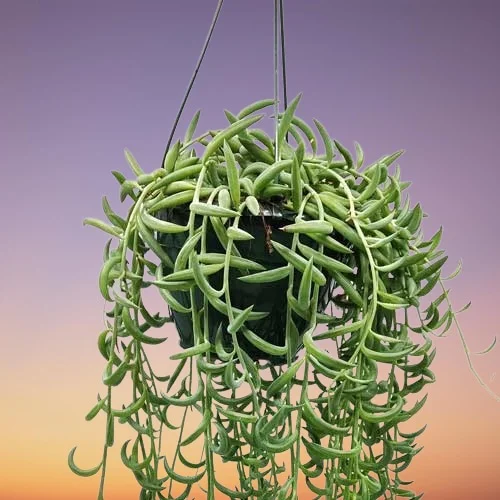
Botanical name: Senecio radicans
Synonmy: Curio radicans
Family: Asteraceae
Common names: String of Bananas Plant, String of Fishhooks Plant, Fishhooks Senecio
Origin
Senecio radicans also called Curio radicans is a creeping, perennial, succulent vine native to the drier parts of Southwest Africa where it is found growing in the shaded conditions under other plants and rocks.
Related Plant
String of Bananas Plant is closely related to Senecio hallianus (String of Beans or Chain of Blue Beans), whose foliage is blue-green.
Is Senecio radicans toxic?
Yes. Senecio radicans like other Senecio species is toxic to humans and pets as outlined by ASPCA. If ingested, it can cause drooling, vomiting, diarrhea and lethargy. Contact with the plant sap may cause skin irritation or skin rash in sensitive skin therefore, always wear gloves when handling the Plant. Keep it away from the reach of children and pets to avoid mishaps.
Where to Buy
Would you like to add String of Bananas Plants to your collection? You may acquire these plants online from Etsy (Link to Etsy).
How to Care for Senecio radicans Indoors
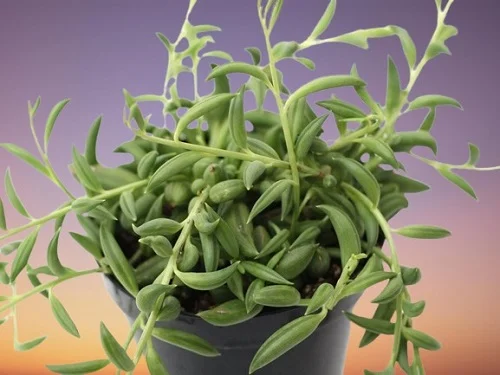
To care for Senecio radicans indoors, give it bright light with 6-8 hours of direct sunlight, warmth of 20-270C, humidity of 50-55% and moderately moist, rich, well drained, succulents soil coupled with monthly feeding during the growing season.
Curio radicans requires pruning to keep the plant neat, to reduce pest and disease infestations and rejuvenate growth. Repotting is only needed when the plant is root-bound. Keep reading for more on these growing conditions and how to achieve them.
Watering
How often should I water my String of Bananas Plant?
Do not water String of Bananas Plant on a schedule to avoid either overwatering or underwatering as both are disastrous to plant growth.
Keep in mind that String of Bananas Plant is a drought-tolerant plant meaning it does not require too frequent water. Always do the finger test before watering; insert 2-3 inches of your finger and feel the soil. If it feels dry, water the plant. If it feels wet, do not water.
Water Senecio radicans liberally in spring and summer until the water flows out through the drainage hole. Allow the top 2-3 inches of soil to dry out between waterings to maintain the soil moderately moist. Take care not to overwater to prevent rotting, yellowing and leaf loss.
Cut down on watering in fall and winter to keep the soil barely moist since growth is slowed at this time. However, do not allow the soil to dry out completely for a prolonged period as underwatering can lead to wilting, shrivelling, yellowing and leaf drop.
To prevent cold shock which can result in stunted growth and leaf loss, avoid watering with cold water consistently; use room temperature water. Confirm that the water is free of chlorine and other dissolved chemicals to avoid staining and browning of leaves.
Use a pot that has a drainage hole and a free-draining soil to prevent waterlogging as it can lead in rotting and eventual plant death. Avoid wetting the foliage to minimize fungal diseases.
Light Requirements
How much sun does a String of Bananas Plant need?
String of Bananas Plant needs bright light with 6-8 hours of morning or late afternoon sunlight per day. Keep it away from hot midday sun to prevent scorching and loss of leaf color.
Inadequate light for String of Fishhooks Plant will result in a leggy plant and the banana-like leaves will be sparsely spaced. Therefore, if the natural light is not sufficient, use full spectrum grow lights to increase it.
Rotate the pot regularly to make sure that the plant receives light on all sides for uniform growth as well as avoid leggy growth and leaf drop.
Temperature & Humidity
Senecio radicans prefers a warmth of 20-270C; a room temperature that is comfortable for you is ideal for this plant.
Keep Fishhooks Senecio away from sources of drafts like AC units, heat sources, open doors, drafty windows and others to prevent sudden temperature changes as they can cause stunted growth, wilting, yellowing and leaf drop.
String of Bananas Plant has no need for extra humidity; a humidity of 50-55% is ideal for the plant. Maintain good air circulation to prevent fungal diseases infestations.
Fertilizer
What is the best fertilizer for String of Bananas Plant?
Feed String of Bananas Plant monthly with a balanced, liquid fertilizer in the growing season to boost growth. This plant is not a heavy feeder so be careful when feeding.
Withhold fertilizer in the cold season as growth is minimal at this time to prevent fertilizer burn due to salts buildup.
Potting Soil
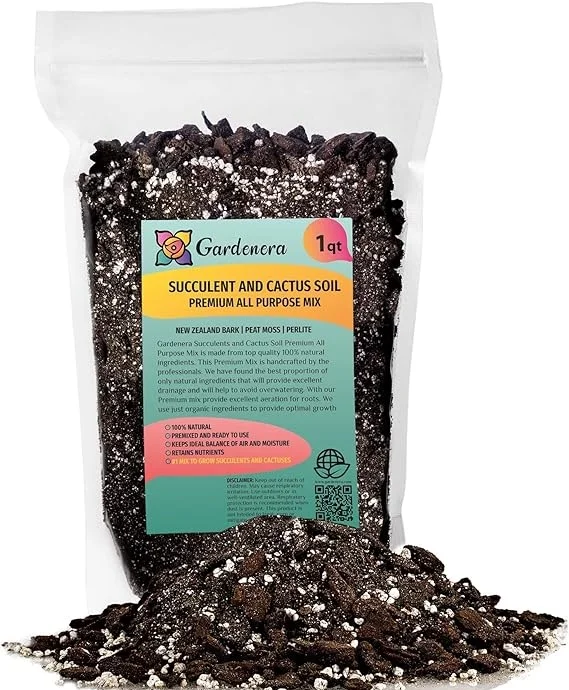
The best potting soil for Senecio radicans should be rich in organic matter, loose and free-draining to prevent sogginess. The soil should be loose enough to allow water to drain out fast enough. A Cactus and succulents mix is good as it drains easily.


Repotting
String of Bananas Plant has a small root system so frequent repotting is not necessary. Repot at the beginning of the growing season only when it becomes crowded in its current pot.
Use a pot only 1 size larger that has a drainage hole to prevent waterlogging which can lead to rotting. Use a shallow pot and be careful not to bury the stems of the plant to prevent rotting. Check out these succulents pots on Amazon.
Pruning
Pruning Curio radicans involves removal of any dead leaves and stems to keep the plant neat and also discourage pest and disease infestations.
Trim the stems at the beginning of the growing season, if they become too long or straggly to rejuvenate growth and promote a fuller growth.
Senecio radicans Propagation
String of Bananas Plant is best propagated from stem cuttings, at the beginning of the growing season, for faster establishment.
Propagating String of Bananas Plant from stem cuttings
- Take 3-5 inches stem cuttings from a healthy plant and allow the cuttings to dry (callus) for about 7 days.
- Lay the stems on moist, free-draining soil and lightly press the stems into the soil at the nodes.
- Place the set up in a warm, well-lit place away from direct sunlight to prevent scorching.
- Maintain the soil moist until the stems are rooted.
- Allow substancial growth of the new plant before transplanting, after which routine care can begin.
Senecio radicans Problems & Solutions
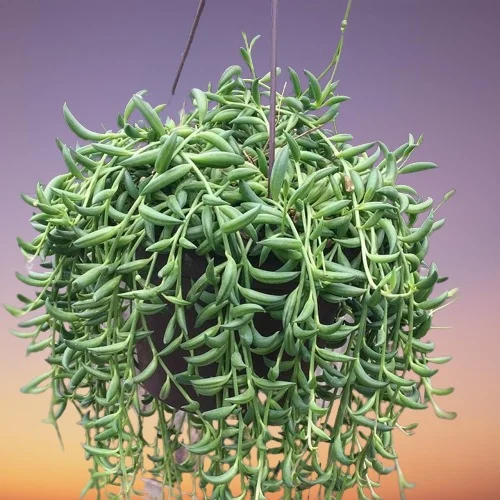
String of Bananas Plant problems are plant dying, leaf loss, leggy growth, pests and diseases among others. Keep reading for more on these problems and how to fix them.
Plant dying
Why is my String of Bananas Plant dying?
Your String of Bananas Plant is dying due to basal stem-rot disease which is prevalent in overwet conditions. It presents with a rotting plant base, yellowing, browning followed by stems collapse.
The disease is difficult to treat because it spreads too fast. Use the upper healthy stems to propagate new plants and discard the infected plant together with its soil and pot to reduce spread. However, if caught early, the plant can be treated as follows.
How to treat early infestation
- Cut and discard or burn the diseased tissue to minimize spread.
- Keep the soil on the drier side; withhold watering for 10-14 days.
- Use a fast-draining soil and a pot with a drainage hole.
- Maintain good ventillation to reduce the disease infestation.
- Place the plant away from cold drafts to prevent temperature drops.
Leaf loss
Leaf loss on Senecio radicans is caused by insufficient light, inconsistent watering, soggy soil, use of cold water or temperature stress.
How to fix it
Insufficient light: Position the plant in bright light with 6-8 hours of direct sunshine or use a grow light if the natural lighting is not adequate.
Inconsistent watering: Water the plant when the top 2-3 inches of soil to dry out and do not allow the soilball to dry out completely.
Soggy soil: Use a pot that has a drainage hole and a fast-draining soil.
Use of cold water: Use tepid (room temperature) water to avoid shocking this tropical plant.
Temperature stress: Keep the plant away from sources of drafts like AC units, open doors, drafty windows, hot air vents, heat sources among others.
Leggy growth
Leggy growth on String of Bananas Plant is due to soggy soil or too little light.
How to fix it
Soggy soil: Maintain the soil barely moist in the cold season. Confirm that the pot has a drainage hole and the soil is fast-draining.
Too little light: Position the plant in a brighter spot where it will receive bright light with 6-8 hours of direct sunshine or instal grow lights if the natural light is not enough.
Pests
Common pests on String of Bananas Plant are spider mites, scale insects and mealy bugs which are especially common in dry conditions.
How to fix it
- Isolate the affected plant to reduce spread to other plants.
- Treat the infested plant a neem oil as per the manufacturer's recommendations.
- Regularly inspect the plant for these pests and take timely control measures.
- Keep the plant well pruned to discourage these pests.
Diseases
Senecio radicans is prone to the following diseases:
1. Leaf spot disease which is enhanced by poor air circulation and is characterized by brown, soft leaf spots.
How to fix it
- Isolate the affected plant to prevent spread to the other plants.
- Treat the affected plant with neem oil as per the manufacturer's recommendations.
- Ensure free air circulation to discourage the diseases.
- Avoid wetting the foliage or water the plant from the bottom.
- Allow the top half of soil to dry out between waterings.
- Use a pot with a drainage hole and fast-draining soil.
2. Powdery mildew which is prevalent in warm, humid conditions. It is characterized by spotting or coating of the leaf surface with a white powdery deposit.
How to fix it
- Remove the badly affected leaves and discard or burn to minimize spread to other parts of the plant.
- Treat the affected plant with neem oil as per the manufacturer's instructions.
- Improve ventillation to reduce the occurrence of the disease.
You liked it? Share on social media.
Related Content
Amazon Associates Disclosure
Homeplantsguide.com is a participant in the Amazon Services LLC Associates Program, an affiliate advertising program designed to provide a means for sites to earn advertising fees by advertising and linking to amazon.com.