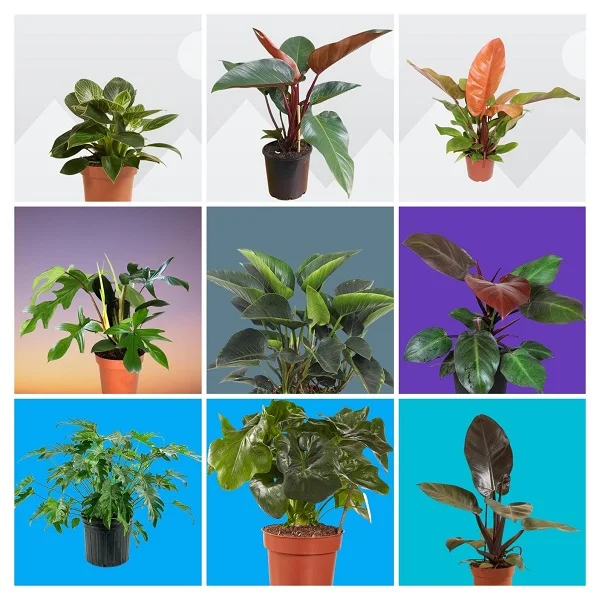
26 Stunning Vining Philodendron Varieties with Names and Pictures
Some links in this post may be affiliate links
What Is a Vining Philodendron?
If you have ever walked into a plant shop and been instantly drawn to a cascade of lush green leaves spilling over the edge of a shelf, chances are you were looking at a Vining Philodendron. These trailing and climbing tropical beauties are among the most popular plants in the world.
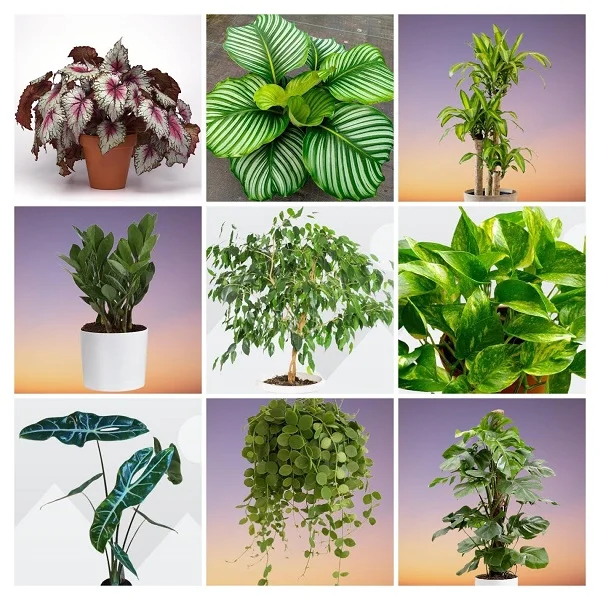
Vining Philodendrons are a subset of the vast Philodendron Genus, which comprises of over 500 species, native to the tropical rainforests of Central and South America. Unlike the self-heading (upright) Philodendrons, Trailing Philodendrons produce long, flexible stems that either trail downward gracefully or climb upward with the help of aerial roots, especially when given a form of support.
Indoors, Vining Philodendrons can be trailed from shelves or hanging baskets, where they cascade downward beautifully. They can also be trained to climb a moss pole, coco coir pole, or trellis, which encourages larger leaf development as it mimicks the upward growth it would experience in the wild rainforest canopy. In addition, Trailing Philodendrons can be allowed to sprawl as a tabletop plant in a pot.
Whether you are a first-time plant parent or a seasoned collector, there is a Climbing Philodendron for every taste, shelf, and light condition. In this guide, we cover 26 of the best Vining Philodendron Types, complete with individual care requirements, growth habits, and tips to help each one thrive indoors. If you would like to add Philodendron to your collection, you may obtain these plants online from Amazon (Link to Amazon) or from Etsy (Link to Etsy).
It is important to keep in mind that all Philodendron plants are toxic to both humans and pets. The plants contain Calcium oxalate crystals which if ingested can cause burning and swelling in the mouth and throat, vomiting, diarrhea and abdominal pains. Therefore, always wear gloves when handling these plants and keep them out of reach of children and pets.
26 Popular Trailing Philodendron Plants
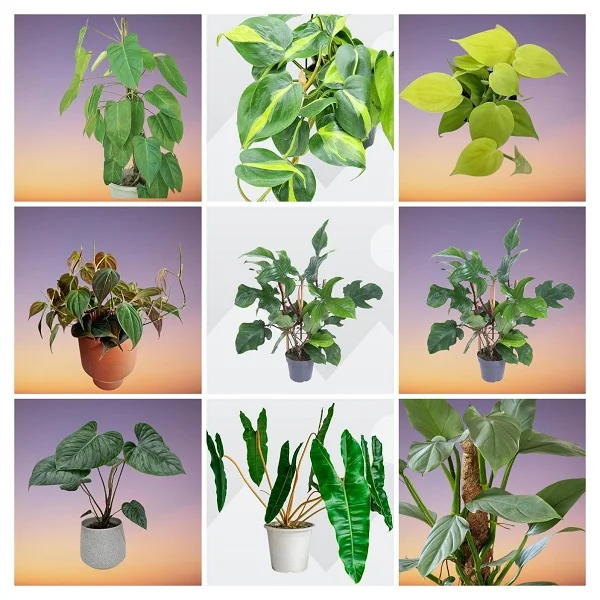
The Top Vining Philodendron Types are Heartleaf Philodendron, Philodendron Brasil, Philodendron Micans, Philodendron Pink Princess, Philodendron Lemon Lime, Philodendron gloriosum, Silver Sword Philodendron, Philodendron Brandtianum, Blushing Philodendron among others.
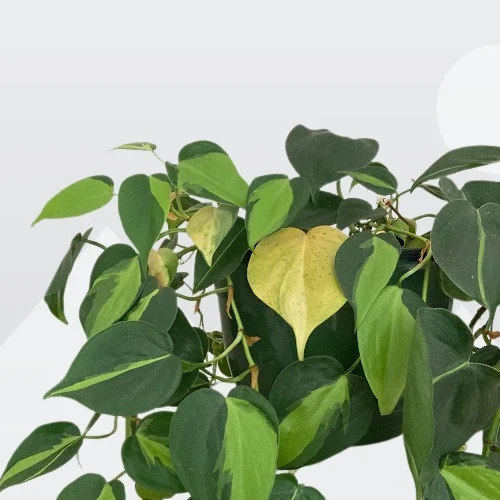
1. Heartleaf Philodendron
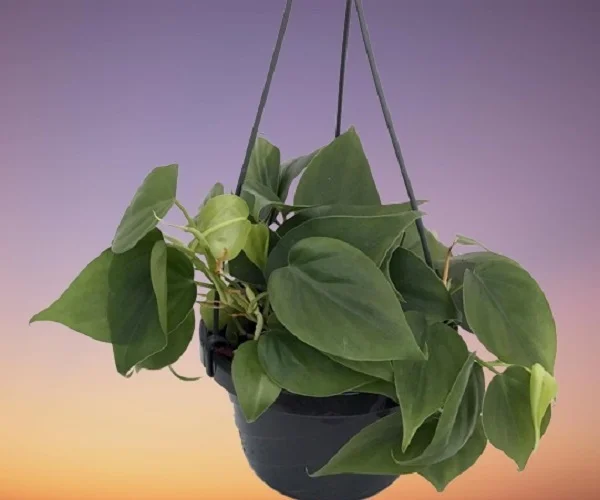
Botanical name: Philodendron scandens
Synonym:Philodendron hederaceum
Common names: Heartleaf Philodendron, Sweetheart Plant
Light: Low to bright indirect light
Water: Allow the top 1–2 inches of soil to dry between waterings
Humidity: 40–60%
Growth: Trails to 4–6 feet
Best for: Hanging baskets, moss pole, shelves, beginners
Heartleaf Philodendron is the most widely grown and easily recognized Vining Philodendron. Its small, glossy, deep-green, heart-shaped leaves grow on slender trailing vines. Philodendron scandens is incredibly forgiving of low light, irregular watering, and general neglect which make it the top recommendation for beginners. If the leaves become small and the vines become leggy, give it more light. It bounces back quickly once conditions improve.
2. Philodendron Brasil
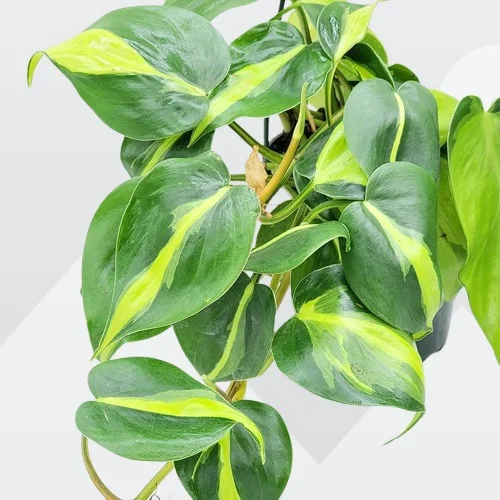
Botanical name: Philodendron hederaceum 'Brasil'
Common names: Philodendron Brasil
Light: Medium to bright indirect light
Water: Water when the top inch of soil feels dry
Humidity: 50–60%
Growth: Vigorous grower; vines reach 4–6 feet
Best for: High shelves, hanging baskets, beginners and intermediate growers
Brasil is a cultivar of Philodendron hederaceum with the same easy-care nature but with stunning variegated leaves featuring streaks of lime green, yellow, and dark green, resembling the colors of the Brazilian flag. It grows at a moderate to fast pace and is just as hardy as the standard heartleaf. Low light can cause the variegation to fade to solid green over time. Keep it near a bright window for the best color contrast.
3. Philodendron Micans
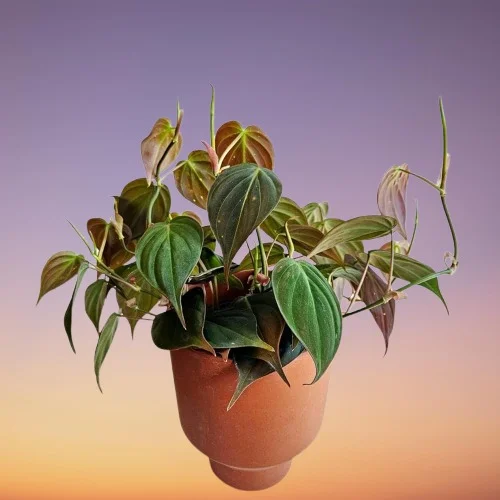
Botanical name: Philodendron hederaceum var. Hederaceum
Common name: Velvet Leaf Philodendron
Light: Medium to bright indirect light
Water: Water when the top 1–2 inches of soil feel dry
Humidity: 60–70%
Growth: Long trailing vines up to 6 feet
Best for: Hanging baskets, macramé hangers, collector displays
Philodendron Micans is often described as the most beautiful of all the easy-care vining types. Its heart-shaped leaves have a soft, velvety texture and an iridescent sheen that shifts between bronze, deep green, and purple depending on the light angle. New growth emerges in a warm, coppery-pink tone before maturing to a rich, dark-green. It needs higher humidity to bring out the sheen.
4. Blushing Philodendron
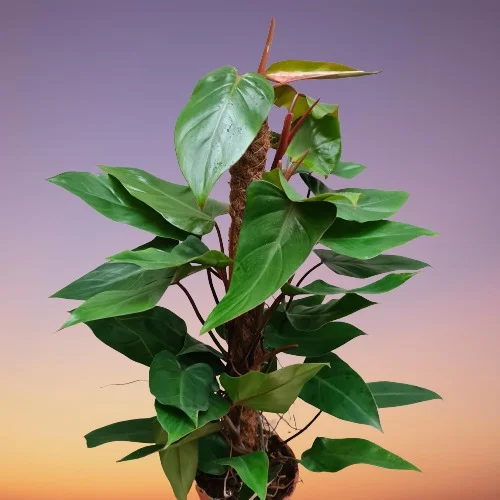
Botanical name: Philodendron erubescens
Common names: Blushing Philodendron, Red-leaf Philodendron
Light: Bright indirect light
Water: Water when the top 1-2 inches dry
Humidity: 60-70%
Growth: Stems grow to 10-20 feet long
Best for: Moss pole display, intermediate growers
Blushing Philodendron features red stems and glossy, large, heart-shaped leaves which appear reddish and eventually turn green as they mature. To encourage branching, pinch off the growing tips to prevent the plant from growing with long, single stems. Always pinch after a leaf node as a new stem will grow from the node.
Many cultivars of Philodendron erubescens have been developed. These cultivars are self-heading and not climbing. They include Black Cardinal, Imperial Green/Red, Burgundy, Prince of Orange, Moonlight, McColley's Finale, White Princess among others.
5. Philodendron Pink Princess
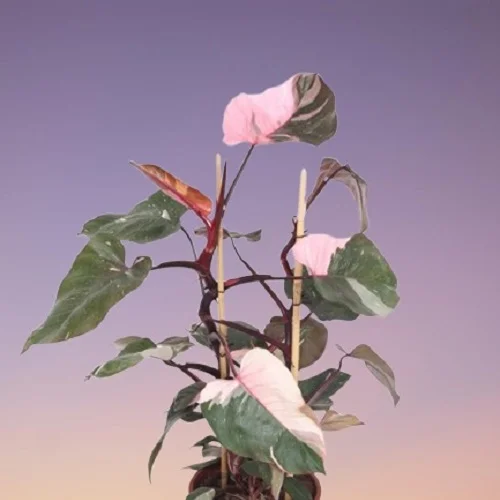
Botanical name: Philodendron erubescens 'Pink Princess'
Common name: Philodendron Pink Princess
Light: Bright indirect light (essential for maintaining pink variegation)
Water: Allow the top 1-2 inches of soil to dry between waterings
Humidity: 60–70%
Growth: Slow to moderate; vines reach 2–5 feet
Best for: Collectors, statement shelves, moss pole displayss
Philodendron Pink Princess large, heart-shaped leaves display a striking combination of deep chocolate-burgundy green and blush-pink variegation, this pink is natural and stable. No two leaves are identical. If your plant begins reverting to all-green leaves, move it closer to a bright light source immediately. Cut off any all-green stems to prevent reversion taking over.
6. Philodendron Lemon Lime
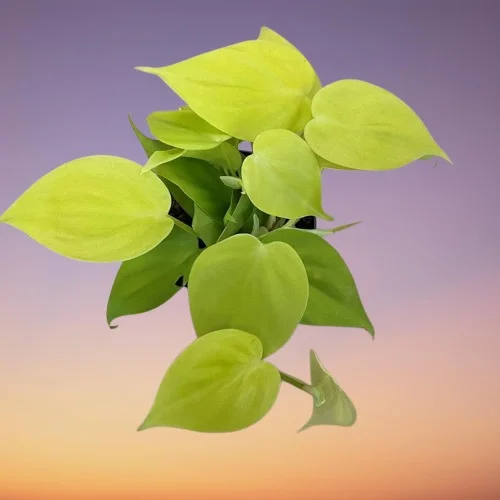
Botanical name: Philodendron hederaceum 'Lemon Lime'
Common name: Philodendron Lemon Lime
Light: Bright indirect light
Water: Water when the top inch of soil feels dry
Humidity: 50–65%
Growth: Vines trail to 4–6 feet
Best for: White or dark-walled rooms where the color can pop, hanging planters
Lemon Lime Philodendron is a showstopper cultivar with intensely bright, chartreuse-yellow to lime-green leaves. New growth emerges in a vivid acid-yellow before maturing to a slightly deeper lime green. The trailing habit is identical to the standard Heartleaf, but the color contrast makes it a statement plant in any room. Avoid direct sun, which can bleach the already-bright leaves. Bright, filtered light gives the best color payoff (lower light causes the neon color to dull).
7. Philodendron sagittifolium
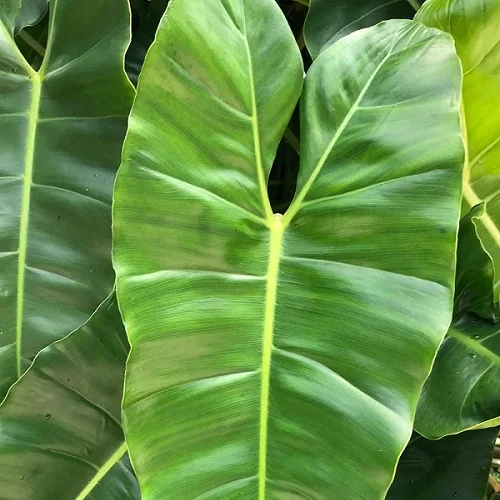
Botanical name: Philodendron sagittifolium
Common name: Arrowhead Philodendron
Light: Bright indirect light
Water: Water when the top 1-2 inch of soil feel dry
Humidity: 50–55%
Growth: Vines trail to 10 feet
Best for: Moss pole display, intermediate growers
Philodendron sagittifolium is a vigorously-growing, climbing Philodendron variety, featuring large, arrow-shaped leaves which are pale-green on top and dark-green with light green spots on the undersides. Its large leaves make it perfect for a dramatic effect in any space. Learn how to grow and care for Philodendron sagittifolium.
8. Philodendron burle-marxii
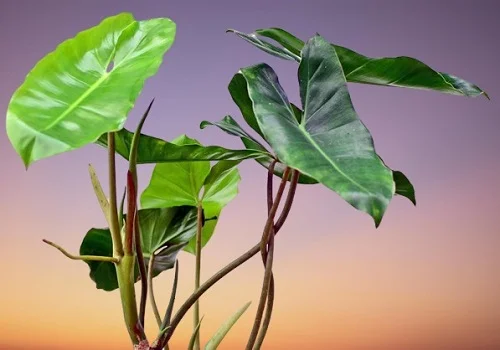
Botanical name: Philodendron burle-marxii
Common name: Philodendron burle-marxii
Light: Bright to medium indirect light
Water: Water when the top 1-2 inches dry
Humidity: 60-70%
Growth: Stems grow to 3 feet long
Best for: Moss pole display, intermediate growers
Philodendron burle-marxii is among low maintenance Philodendron varieties and features glossy, leathery, emerald-green, cordate leaves. It can be grown as a creeper, spreading on the ground or as a vining climber on a moss pole. It is named after Robert Burle Marx (1909-1994), the Brazilian Landscape Artist whose designs of parks and gardens made him world-famous. Two varieties are available 'Variegata' with variegated leaves, either white or yellow and the slow-growing 'Fantasy' which has darker leaves with a more velvet appearance.
9. Silver Sword Philodendron
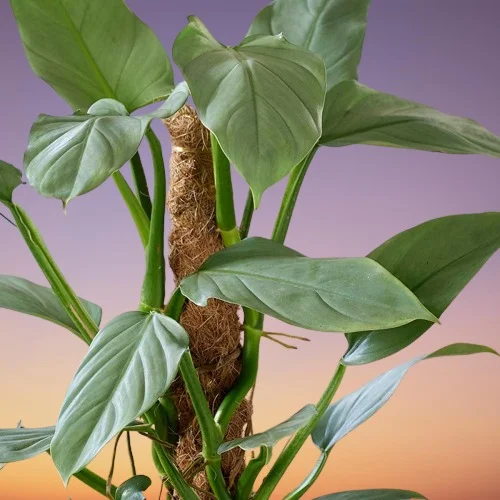
Botanical name: Philodendron hastatum 'Silver Sword'
Common name: Silver Sword Philodendron
Light: Bright indirect light
Water: Water when the top 1–2 inches of soil are dry
Humidity: 60–70%
Growth: Fast grower, can reach 5–8 feet indoors
Best for: Moss pole setups, intermediate growers, modern interiors
Silver Sword Philodendron earns its name from the elongated, sword-shaped leaves that glow with a silvery-blue metallic sheen which is particularly striking in juvenile plants. As it matures and climbs, the leaves become larger and shift to a deeper green while retaining a subtle silver tint. It is a vigorous, fast-growing climber that rewards moss pole support enthusiastically.
10. Spadeleaf Philodendron
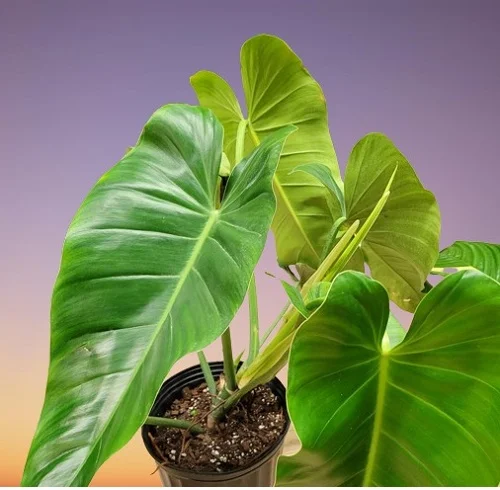
Botanical name: Philodendron domesticum
Common names: Spadeleaf Philodendron, Burgundy Philodendron
Light: Bright indirect light
Water: Water when the top 1–2 inches of soil feel dry
Humidity: 60–70%
Growth: Climbs upto 8 feet
Best for: Moss pole or trellis displays, intermediate growers
Spadeleaf Philodendron is an evergreen climber which bears long, glossy, spade-shaped leaves and reddish-purple stems. The mature leaves are about 2 feet long and 1 feet wide. It requires annual repotting for the young plants while the mature plants need annual replenishment of the soil.
11. Philodendron Black Gold
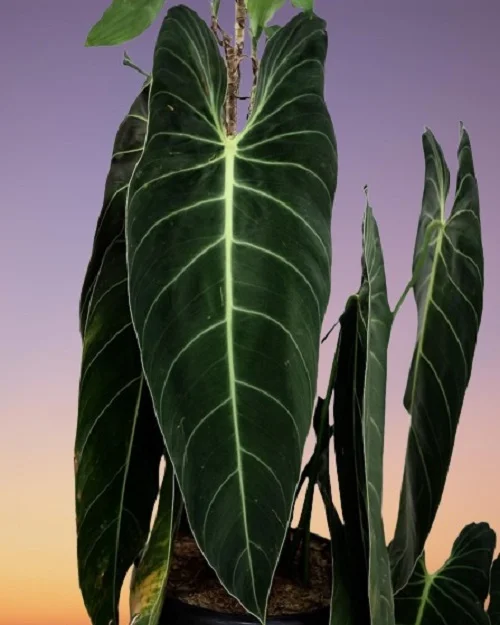
Botanical name: Philodendron melanochrysum
Common name: Philodendron Black Gold
Light: Bright indirect light
Water: Allow the top 1–2 inches of soil to dry between waterings
Humidity: 65–80%
Growth: Climbs vigorously, upto 5 feet
Best for: Moss pole setups, humid plant rooms, experienced growers
Black Gold Philodendron, is one of the most spectacular, rare, fast-growing, Vining Philodendrons available. It produces large, elongated, velvety leaves in a deep blackish-green with pale veins and tiny golden sparkles visible in sunlight, hence the name "black gold." Juvenile leaves emerge in a coppery-pink hue and mature into the signature dark, velvety form. The leaves nearly double in size when given a climbing structure and adequate humidity.
12. Ecaudor Philodendron
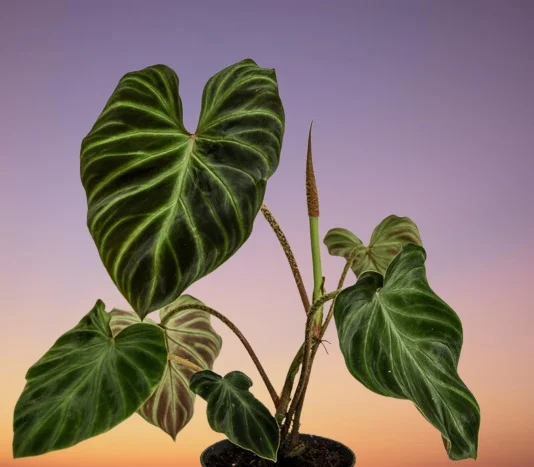
Botanical name: Philodendron verrucosum
Common name: Ecaudor Philodendron
Light: Bright indirect light
Water: Allow top 1–2 inches to dry
Humidity: 70–85%
Growth: Moderate climber
Best for: Experienced collectors, moss pole, humid terrariums, warm climate growers
The Ecuador Philodendron is one of the most visually dramatic vining species available. Its large, heart-shaped leaves are deep green with bright white or golden veins and a velvety texture.
The stems are covered in distinctive hairy bristles (petiole cataphylls), which add to its otherworldly appearance. It is considered a higher-care, finicky variety best suited to experienced growers.
13. Glorious Philodendron
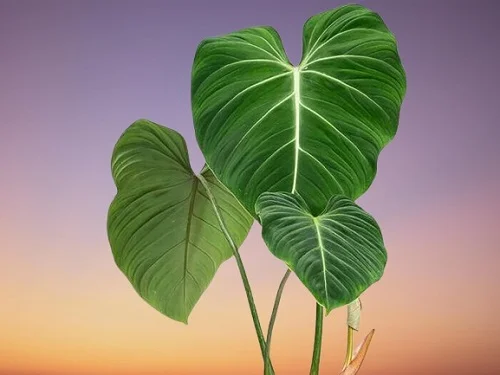
Botanical name: Philodendron gloriosum
Common name: Glorious Philodendron, Creeping Velvet Philodendron
Light: Bright indirect light
Water: Allow the top 1–2 inches of soil to dry
Humidity: 70–80%
Growth: Creeping horizontal growth, reaching about 3 feet
Best for: Wide shallow planters, intermediate, plant collectors, humid setups
Glorious Philodendron is a terrestrial creeper rather than a traditional climber, but it is firmly in the vining/trailing category as it produces horizontal rhizomes that spread along the soil surface. Its enormous, velvety, heart-shaped leaves with pink or white veining are breathtaking.
Philodendron gloriosum is one of the most sought-after Philodendrons in the collector community and is classified as a vulnerable species in the wild. Use a wide, shallow planter rather than a deep pot to accommodate horizontal rhizome growth. A narrow pot will restrict its natural growth habit.
14. Silver Leaf Philodendron
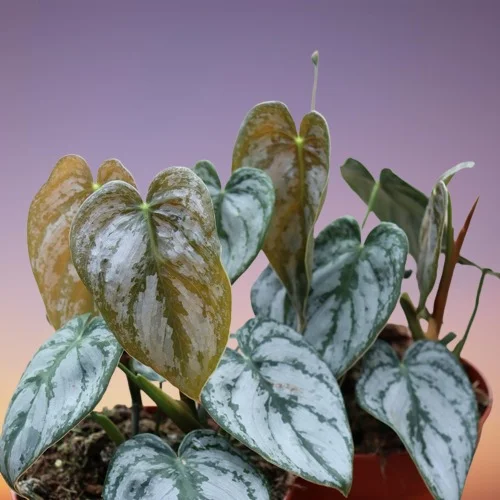
Botanical name: Philodendron Brandtianum
Common names: Silver Leaf Philodendron, Brandi Philodendron
Light: Medium to bright indirect light
Water: Water when the top inch of soil is dry
Humidity: 60–70%
Growth: Moderate climber; reaches 4–5 feet indoors
Best for: Moss pole dispay, shelves, intermediate growers
Silver Leaf Philodendron features distinctive heart-shaped leaves with heavy, silver, variegation overlaid on a dark olive-green background. It is a compact, bushy climber that works beautifully in smaller spaces. Often mistaken for Scindapsus pictus (Silver Satin Pothos), it is in fact a true philodendron with different care needs.
15. Fiddleleaf Philodendron
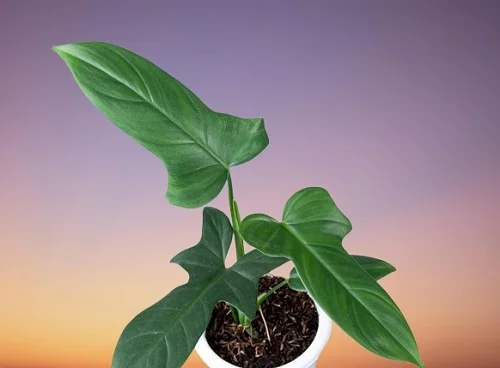
Botanical name: Philodendron bipennifolium
Common name: Fiddleleaf Philodendron
Light: Bright indirect light
Water: Allow the top 1–2 inches to dry between waterings
Humidity: 60–70%
Growth: Vigorous climber
Best for: Moss pole dispay, large display spaces, collectors, experienced growers
Fiddle-leaf Philodendron, is a vining species with distinctively lobed, glossy leaves in a fiddle or horse-head shape. This rare hemiepiphyte from Brazil, Argentina, and Bolivia is a vigorous climber whose leaves become increasingly dramatic as the plant matures on a support. The leaves are about 18 inches long and become far more pronounced and spectacular as the plant climbs higher.
16. Fern-like Philodendron
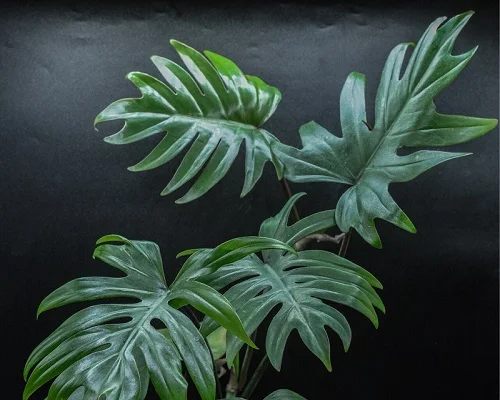
Botanical name: Philodendron mayoi
Common names: Fern-like Philodendron, Palm-like Philodendron
Light: Medium to bright indirect light
Water: Water when the top 1–2 inches of soil feel dry
Humidity: 60–70%
Growth: Vining climber; reaches 2–4 feet indoors
Best for: Hanging baskets, moss pole, collectors, intermediate growers
Fern-like Philodendron is a rare, perennial vining species from Brazil with deeply lobed, palm-frond-like bright green leaves. It is often mistaken for Philodendron elegans (Finger-leaf Philodendron) or Philodendron tortum due to its pinnate foliage. It is a relatively easy-care climber that produces visually dramatic foliage. The plant is named in honor of an aroid botanist, Dr. Simon Mayo.
17. Blotched Philodendron
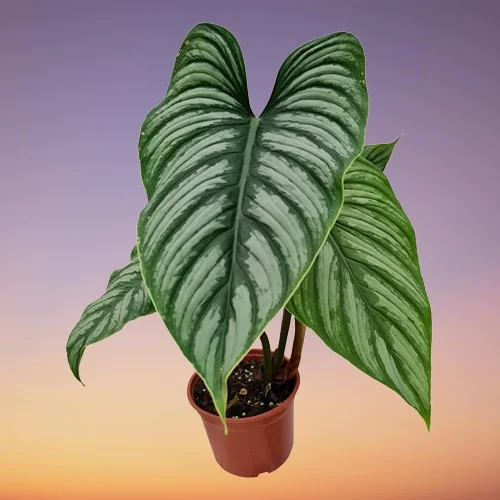
Botanical name: Philodendron mamei
Common name: Blotched Philodendron
Light: Bright indirect light
Water: Allow top 1–2 inches to dry
Humidity: 65–75%
Growth: Creeping horizontal grower, 3-4 feet
Best for: Wide planters, terrariums, intermediate growers, collectors
Philodendron Mamei is a terrestrial, creeping, vining philodendron whose large, matte, heart-shaped, dark-green leaves are decorated with beautiful silver markings and deep, defined veins. It is a low-growing, horizontal, creeper rather than an upright climber, making it unique among vining types.
Native to Ecuador and Peru, it was first collected in 1882 and has since become an invasive species in certain Pacific island groups. Mamei prefers a wide planter to accommodate its horizontal rhizome rather than a deep, narrow pot.
18. Pigskin Philodendron
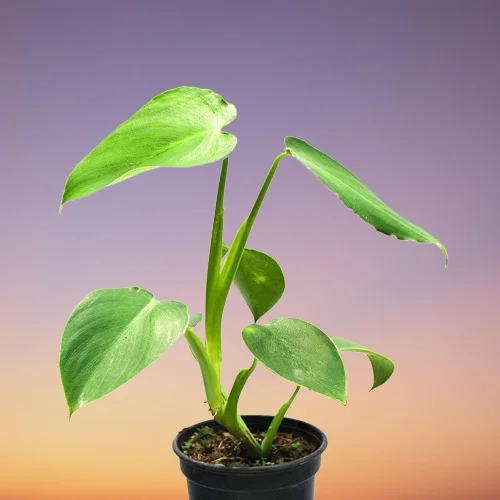
Botanical name: Philodendron rugosum
Common names: Pigskin Philodendron, Sow's Ear Plant
Light: Bright indirect light
Water: Allow the top 1–2 inches to dry
Humidity: 65–75%
Growth: Climber; can reach 10–15 feet
Best for: Moss pole dispays, large indoor spaces, advanced collectors, plant conservationists
Pigskin Philodendron is a rare, endangered climbing species from the montane forests of Ecuador. The plant is endangered in its native habitat due to destruction of the same to farming; always source from reputable nurseries that propagate plants ethically from cultivated stock.
Philodendron rugosum most distinctive feature is thick, leathery, textured (rugose) heart-shaped leaves with a wrinkled surface, similar in feel to pigskin leather. The name rugosum is derived from the Italian 'ruga' meaning 'wrinkle'.
19. Philodendron ilsemanii Variegata
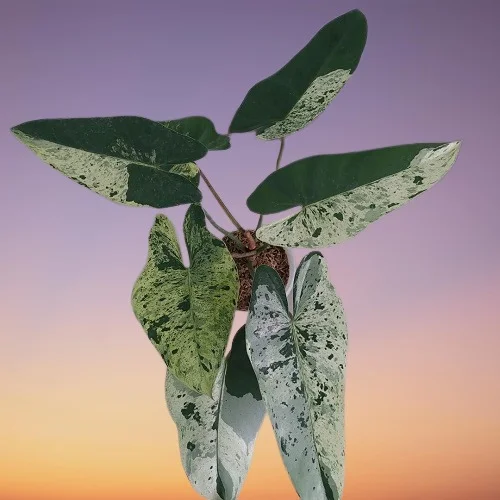
Botanical name: Philodendron ilsemanii Variegata
Common name: Mottled Ilsemanii
Light: Bright indirect light
Water: Allow the top 1–2 inches to dry
Humidity: 65–75%
Growth: Climber; can reach 10–20 feet
Best for: Moss poles and trellis, collectors, plant enthusiasts
Philodendron ilsemanii Variegata is an evergreen climber which bears slender, large, pointed leaves with green and white variegation. The leaves emerge in deep-green, developing the variegation as they continue to grow. The variegation varies from leaf to leaf.
Philodendron ilsemanii Variegata whose origin is not known is a sought-after plant for its striking mottled green-and-cream variegation. It is thought to be a cultivar of Philodendron corcovadense though there is no available documentation to confirm this. Learn how to grow and care for Philodendron ilsemanii 'Variegata'.
20. Philodendron squamiferum
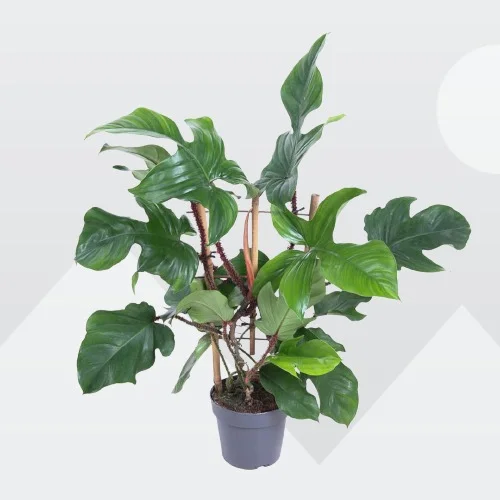
Botanical name: Philodendron squamiferum
Common name: Philodendron squamiferum
Light: Bright indirect light
Water: Allow the top 1–2 inches to dry
Humidity: 60–70%
Growth: Moderate climber; can reach 5–6 feet indoors
Best for: Moss pole displays, bold interior displays, collectors, intermediate to advanced growers
Philodendron squamiferum is a striking Climbing Philodendron with deeply lobed, multi-lobed, green leaves and its most distinctive feature, the bright red, fuzzy petioles (leaf stems). The contrast between the rich green foliage and the red bristled stems makes it one of the most visually interesting Vining Philodendrons available. Keep the plant in good light to ensure healthy, colorful new growth.
21. Philodendron tortum
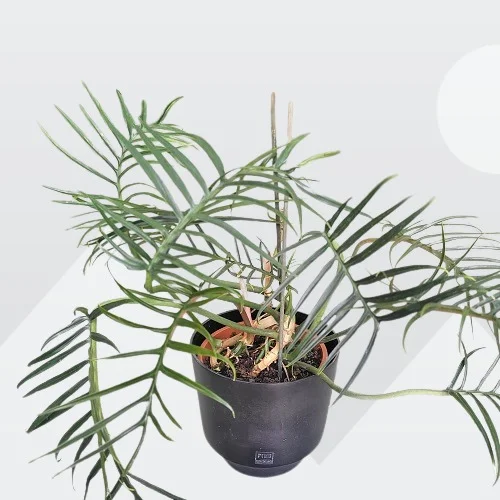
Botanical name: Philodendron tortum
Common name: Philodendron tortum
Light: Bright indirect light
Water: Allow the top 1–2 inches to dry
Humidity: 65–80%
Growth: Moderate to slow climber
Best for: Moss poles, humid plant rooms, show-piece displays, advanced collectors
Philodendron tortum is one of the rarest and most dramatic Vining Philodendrons in cultivation. Its leaves are so deeply and finely divided that they look skeletal. Each long, narrow leaflet extends outward like the tines of a comb or the twisted vanes of a feather. Native to Brazil and Bolivia, it is both rare in the wild and in cultivation.
22. Philodendron sodiroi
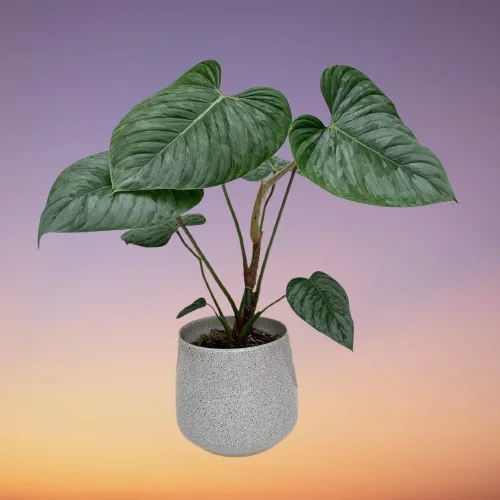
Botanical name: Philodendron sodiroi
Common name: Philodendron sodiroi
Light: Bright indirect light
Water: Allow the top 1–2 inches to dry
Humidity: 65–80%
Growth: Shingling climber
Best for: Flat bark slab or wide moss pole, plant rooms, advanced collectors
Philodendron sodiroi is a rare 'shingling' Vining Philodendron, meaning it presses its leaves flat against the surface it climbs, creating a striking overlapping tile effect on moss poles or bark. Its heart-shaped leaves are adorned with beautiful silver and grey markings on a green base, similar to Philodendron Mamei but with a distinct climbing shingling habit.
23. Philodendron billietiae
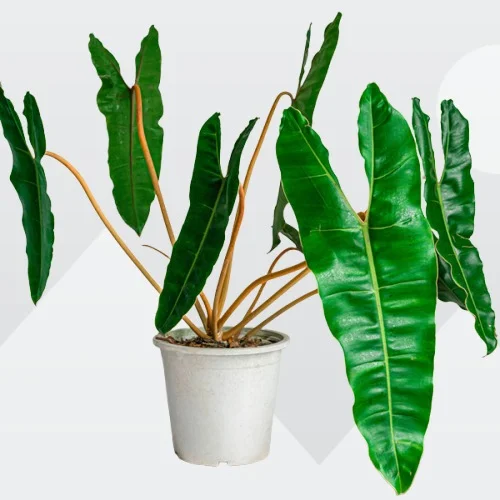
Botanical name: Philodendron billietiae
Common name: Philodendron billietiae
Light: Bright indirect light
Water: Allow the top 1–2 inches to dry
Humidity: 65–75%
Growth: Vigorous climber, upto 3 feet
Best for: Moss pole, trellis, advanced collectors
Philodendron billietiae is a rare and striking, Climbing Philodendron originally discovered in French Guiana. It produces long, narrow, wavy-edged, green leaves that are unmistakable in shape. However, its most eye-catching feature is the bright orange-yellow petioles (leaf stems). It is one of the few philodendrons where the stem color is as spectacular as the leaf itself. The young specimens have shorter, more oval leaves.
24. Philodendron Ring of Fire
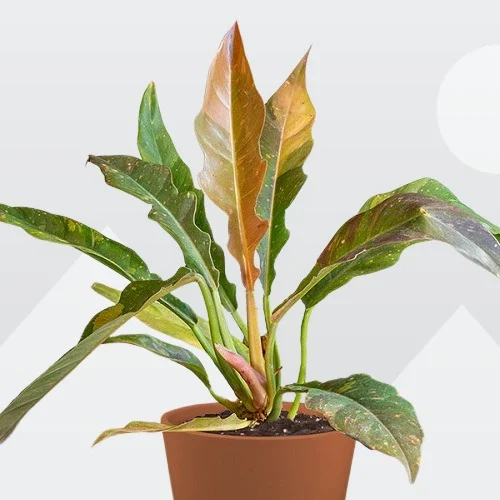
Botanical name: Philodendron bipinnatifidum x selloum
Common name: Philodendron Ring of Fire
Light: Bright indirect light
Water: Allow the top 2-3 inches to dry between waterings
Humidity: 60-80%
Growth: Moderate grower, upto 8 feet
Best for: Moss pole, hanging baskets, Beginners and intermediate growers
Philodendron Ring of Fire is a rare and highly sought-after plant due to its long, serrated leaves and fiery variegation. The foliage changes through striking shades of cream, yellow, orange and red as the leaves mature.
25. Philodendron White Knight
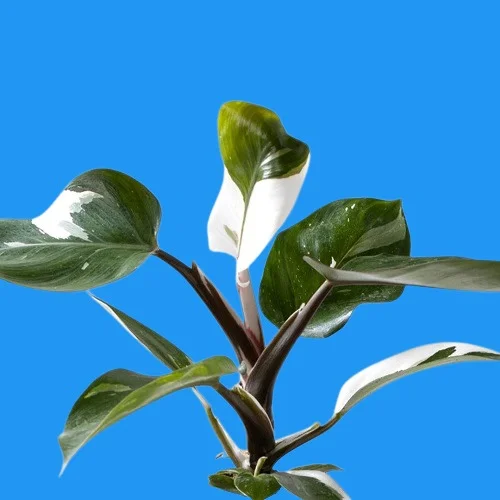
Botanical name: Philodendron erubescens 'White Knight'
Common name: Philodendron White Knight
Light: Bright indirect light
Water: Allow the top 1–2 inches to dry, keep soil consistently moist
Humidity: 60-70%
Growth: Moderate, 3 feet
Best for: Moss pole, trellis, Intermediate growers
Philodendron White Knight is a rare, sought-after, climbing Philodendron. It features long, pointed green leaves, splashed with light-green and stark-white variegation. Its stems are burgundy or brownish-purple. White Knight is often mistaken for its siblings, White Princess featuring green stems with pink edges/stripes or White Wizard with pure green stems.
26. Philodendron Florida Green
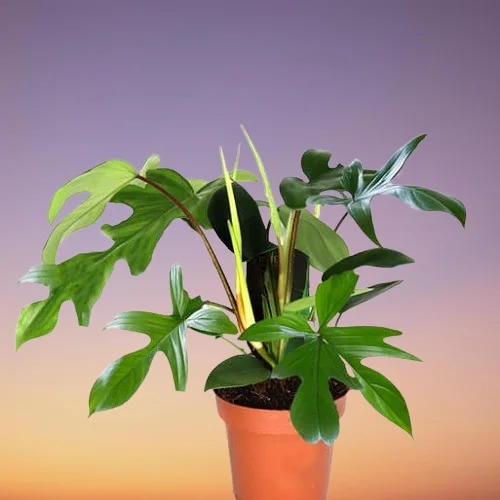
Botanical name: Philodendron squamiferum × pedatum
Common name: Philodendron Florida Green
Light: Medium-bright indirect light
Water: Allow the top 1–2 inches to dry between waterings
Humidity: 60-70%
Growth: Fast-growing, 5-7 feet
Best for: Moss pole, beginners and intermediate growers
Philodendron Florida Green is a rare, fast-growing, climbing hybrid reknowned for its deeply lobed, glossy green leaves and reddish-pink stems. To reach its maximum size, it requires a a moss pole to encourage upward growth. Popular plants in this series are Florida Beauty which features vibrant, pale and dark green variegation and Florida Ghost whose leaves begin white or minty-green and mature to dark-green.
Propagating Vining Philodendrons
Vining Philodendrons are among the easiest plants to propagate. The fastest way to propagate Vining Philodendrons is by rooting the stem cuttings in water. Rooting the cuttings in soil is also a perfect method of propagation and produces stronger roots though it takes slightly longer.
The key to successful propagation lies in nodes; the slightly raised bump on a stem from which leaves, aerial roots and new growth emerge. Every successful cutting must have at least one node because without it, even a healthy cutting will fail to root, no matter how long you wait. Learn how to propagate Philodendrons in 4 Easy Ways.
Vining Philodendrons Quick Reference Chart
| Variety | Difficulty | Light needs | Humidity | Best Display |
|---|---|---|---|---|
| 1. Heartleaf | Beginner | Low-bright indirect | 40-65% | Hanging basket, shelf |
| 2. Brasil | Beginner | Medium-bright indirect | 50-65% | Hanging basket, shelf |
| 3. Micans | Beginner | Medium-bright indirect | 60-70% | Hanging basket, shelf |
| 4. Lemon Lime | Beginner | Bright indirect | 50-65% | Hanging basket |
| 5. Erubescens | Intermediate | Bright indirect | 60-70% | Moss pole |
| 6. Pink Princess | Intermediate | Bright indirect | 60-70% | Moss pole |
| 7. Sagittifolium | Intermediate | Bright indirect | 50-55% | Moss pole |
| 8. Burle-marxii | Intermediate | Bright-medium indirect | 60-70% | Moss pole |
| 9. Silver Sword | Intermediate | Bright indirect | 60-70% | Moss pole |
| 10. Spadeleaf | Intermediate | Bright indirect | 60-70% | Moss pole, trellis |
| 11. Melanochrysum | Intermediate | Bright indirect | 65-80% | Moss pole |
| 12. Verrucosum | Advanced | Bright indirect | 70–85% | Moss pole, humid terrariums |
| 13. Gloriosum | Intermediate | Bright indirect | 70–80% | Wide shallow planters |
| 14. Brandtianum | Intermediate | Medium-bright indirect | 60-70% | Shelf, moss pole |
| 15. Bipennifolium | Intermediate | Bright indirect | 60–70% | Moss pole |
| 16. Mayoi | Intermediate | Medium-bright indirect | 60–70% | Hanging basket, moss pole |
| 17. Mamei | Intermediate | Medium-bright indirect | 65–75% | Wide planters, terrariums |
| 18. Rugosum | Advanced | Bright indirect | 65–75% | Moss pole |
| 19. Ilsemanii Variegata | Advanced | Bright indirect | 65–75% | Moss pole, trellis |
| 20. Squamiferum | Intermediate | Bright indirect | 60–70% | Moss pole |
| 21. Tortum | Advanced | Bright indirect | 65–80% | Moss pole |
| 22. Sodiroi | Advanced | Bright indirect | 65–80% | Bark slab, moss pole |
| 23. Billietiae | Advanced | Bright indirect | 65–75% | Moss pole, trellis |
| 24. Ring of Fire | Beginner | Bright indirect | 60-80% | Moss pole, hanging basket |
| 25. White Knight | Intermediate | Bright indirect | 60-70% | Moss pole, trellis |
| 26. Florida Green | Beginner | Medium-bright indirect | 60-70% | Moss pole |
Frequently Asked Questions (FAQs)
1. What is the difference between Vining and Non-vining Philodendrons?
Vining (climbing or trailing) Philodendrons produce long, flexible stems with aerial roots and grow either upward on supports or trail downward from hanging planters. Non-vining (self-heading) Philodendrons grow from a central rosette in an upright, compact form without producing trails of vines.
2. Do Vining Philodendrons need a moss pole?
Vining Philodendrons do not strictly require a moss pole, but when given a moist moss pole to climb, aerial roots attach and the plant produces significantly larger, more dramatic leaves. Without a pole, the plant will trail attractively but the leaves will remain smaller.
3. How fast do Vining Philodendrons grow?
Most Vining Philodendrons are moderate to fast growers during the active growing season (spring and summer).
4. How do I propagate a Vining Philodendron?
Vining Philodendron are best propagated during the growing season by stem cuttings which can be rooted either in water or in soil.
5. What is the easiest Vining Philodendron for beginners?
Philodendron hederaceum (Heartleaf Philodendron) is universally considered the easiest Vining Philodendron for beginners.
6. What is the rarest Vining Philodendron?
Philodendron spiritus-sancti is considered the rarest and most valuable. Other rare varieties are Philodendron Tortum, Gloriosum 'Dark Form', Sodiroi, and Rugosum.
7. How do I make my Vining Philodendron bushier?
Prune long vines back to a node to encourage branching and fuller growth. The cut sections can be used as propagation cuttings. Pinching back the growing tips regularly also encourages the plant to direct energy into side shoots rather than extending one long vine.
8. How do I choose between trailing and climbing display for my Vining Philodendron?
It comes down to space and aesthetics. Trailing (from a hanging basket or high shelf) is ideal for smaller spaces and creates a cascading, dramatic effect. Climbing (on a moss pole or trellis) is ideal for taller spaces and results in larger leaves and a more dramatic, upright presence.
9. Can Vining Philodendrons be grown outdoors?
In USDA Hardiness Zones 9–11 (or warm tropical climates), many Vining Philodendrons can be grown outdoors year-round. In cooler climates, they can spend the warmer months outside in a sheltered, shaded spot, but must be brought indoors before temperatures drop below 550F (130C).
10. Do Vining Philodendrons produce flowers indoors?
Very rarely. Philodendrons do flower in the wild, producing a spathe and spadix structure but this almost never happens indoors. The ornamental value of Vining Philodendrons comes from their spectacular foliage.