20 Different Philodendron Plant Varieties with Names and Pictures
Some links in this post may be affiliate links
Characteristics of Philodendron Plants
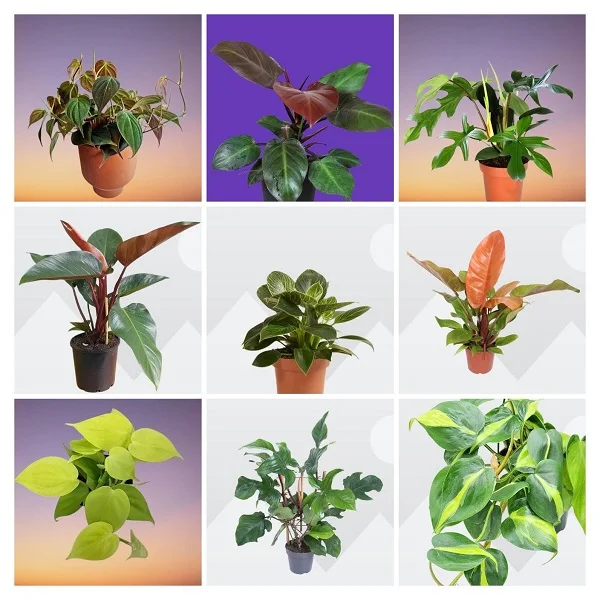
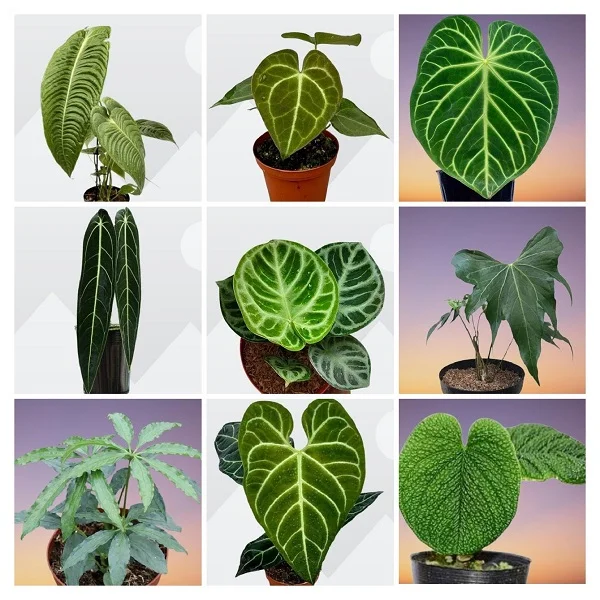
Philodendrons are tropical flowering plants categorized by growth habit and leaf structure. The main types of Philodendrons are climbing (vining) Philodendrons, self-heading (upright) Philodendrons, variegated Philodendrons and rare or collector Philodendron species. These plants are widely grown as indoor plants due to their adaptability, decorative leaves and low-maintenance care.
Philodendrons vary in size, shape and growth pattern. The Vining Philodendrons develop long vines and aerial roots, making them suitable for hanging baskets or moss poles. Self-heading Philodendrons grow upright in a compact form and are often used as floor or tabletop plants.
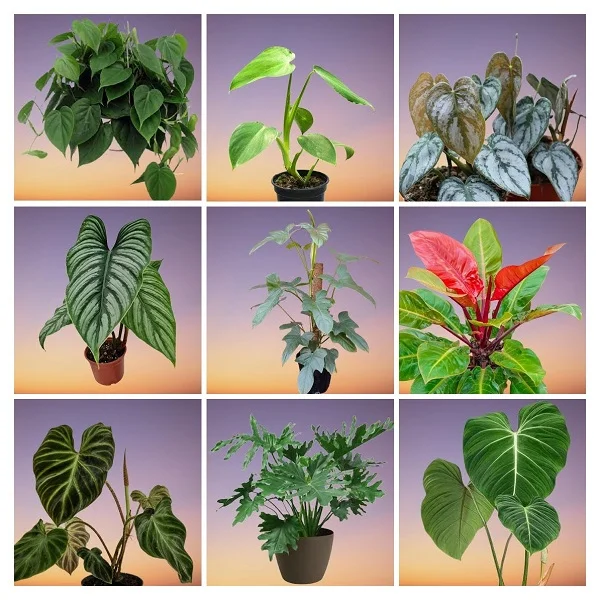
The Variegated Philodendrons display white, yellow, or pink leaf patterns and require brighter indirect light, while rare Philodendron species are valued for unique foliage and limited availability.
The growth habits in Philodendron Varieties can be epiphytic, hemiepiphytic, or rarely terrestrial. Some plants can show a combination of these growth habits depending on the environment.
Philodendrons have some unique structures called cataphylls which distinguish them from Pothos. Cataphylls are modified leaves that surround and protect the newly forming leaves. They are usually green, leaf-like, and rigid while they are protecting the leaf. In some Philodendron species, the cataphylls can even be rather succulent.
The inflorescence consists of a leaf-like hood called a spathe which encloses a tube-like structure called a spadix. A single inflorescence or a cluster of up to 11 inflorescences can be produced at a single time depending on the species. The spathe is usually waxy and bicolored.
Philodendrons have their origin in the tropical forests of Central and South America. There are about 500 species in the Philodendron genus which is the largest genus in the Araceae family. The genus name, 'Philodendron', comes from the Greek words philo- or "love, affection" and dendron or "tree" meaning 'tree-loving' in reference to their growth habits.
Philodendron Plants are considered toxic to both humans and pets. According to National Capital Poison Center, Philodendron plants contain Calcium oxalate crystals. If ingested, they can cause burning and swelling in the mouth and throat, vomiting, diarrhea and abdominal pains. Therefore, keep Philodendrons out of reach of children and pets.
Nonetheless, Philodendrons are delightful plants which symbolize health and abundance. If you are looking to add Philodendron to your collection, you may acquire these plants online from Amazon (Link to Amazon) or from Etsy (Link to Etsy). We have herebelow listed 20 Philodendron types with names and pictures to make it easier for you to make your choice.
20 Popular Philodendron Varieties with Images
The popular Philodendron varieties include Heartleaf Philodendron, Philodendron 'Summer Glory', Philodendron elegans, Blushing Philodendron, Spadeleaf Philodendron, Silver Sword Philodendron, Philodendron selloum 'Sun Red' among others.
1. Philodendron scandens
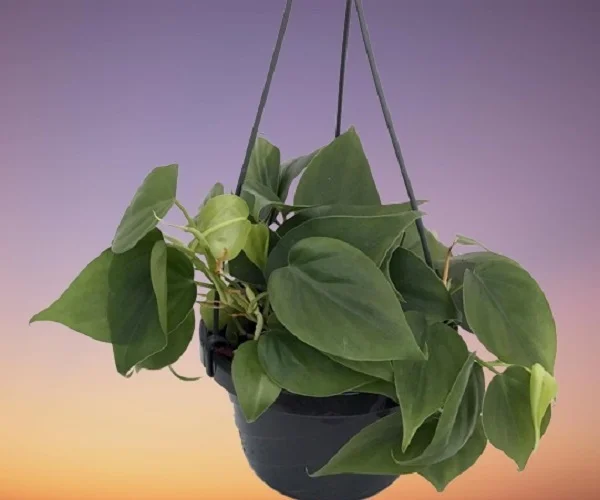
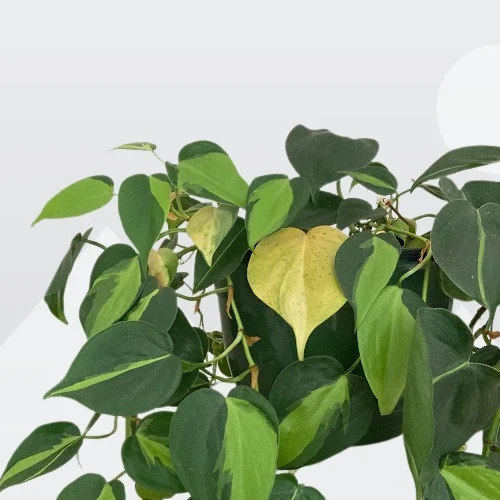
Philodendron scandens commonly called Heartleaf Philodendron or Sweetheart Plant is one of the most popular climbing Philodendrons on account of its ability to thrive in a wide range of growing conditions.
Philodendron scandens also called Philodendron hederaceum has many varieties and cultivars like Philodendron hederaceum 'Micans', Philodendron hederaceum 'Brasil', Philodendron hederaceum 'Cream Splash', Philodendron hederaceum 'Lemon Lime' among others. Sweetheart Plants are magnificient plants for hanging baskets and at least one will be found in most homes.
Philodendron hederaceum thrives in medium to bright indirect light, warmth of 18-260C, humidity of 50-55% and moderately moist, fertile, well-drained soils coupled with monthly feeding during the growing season.
2. Philodendron 'Summer Glory'
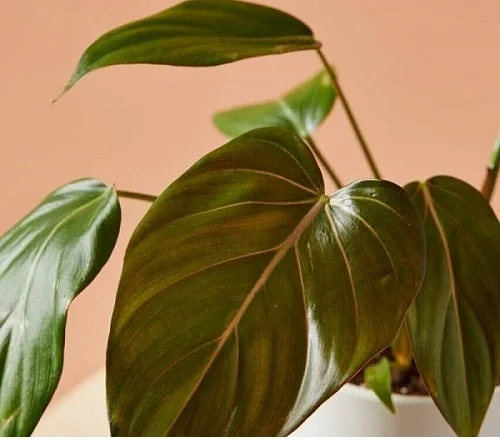
Philodendron 'Summer Glory' is a charming, hybrid plant with an upright, clumping growth and large, deeply-veined leaves which start off reddish-bronze and turn deep-green with a red leaf margin as they mature.
Philodendron 'Summer Glory' is a non-climbing upright bush which looks magnificent in a pot. To keep it upright, give it a moss pole for support to grow the large beautiful leaves. It is among the popular tropical foliage plants for the home.
Philodendron 'Summer Glory' flourishes in bright indirect light (filtered light), warmth of 18-260C, humidity of 60-70% and moderately moist, ferile, well-drained soils coupled with monthly feeding during the growing season. Learn how to grow and care for Philodendron 'Summer Glory'.
3. Philodendron elegans
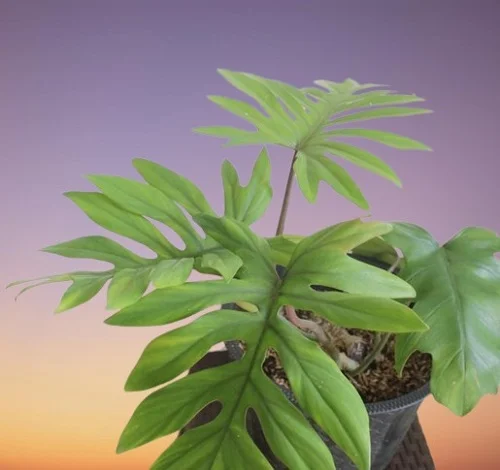
Philodendron elegans commonly called Finger-leaf Philodendron or Skeleton Key Philodendron is a sought-after climbing plant on account of its size and highly divided stately leaves which come in various shades of green and have a glossy sheen. They are highly divided which gives them the appearance of a palm's frond.
Skeleton Key Philodendron is considered to be one of the rare, low-light plants and is often mistaken for with Philodendron radiatum, Philodendron mayoi, Philodendron lancerum or Philodendron tortum due to the pinnate foliage.
Philodendron elegans grows best in medium to bright indirect light, warmth of 16-280C, humidity of 60-70% and moderately moist, rich, well-drained potting mix coupled with monthly feeding in spring and summer.
4. Philodendron erubescens
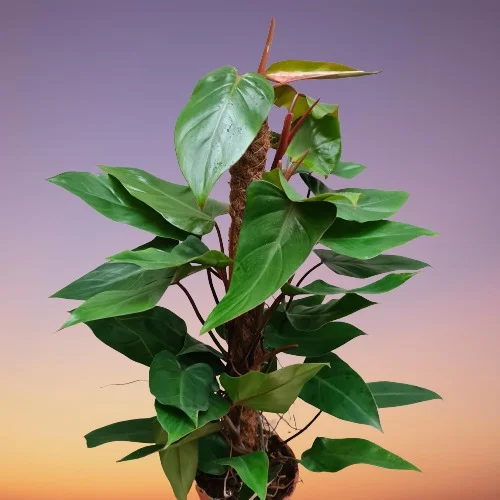
Philodendron erubescens also called Blushing Philodendron, Red-leaf Philodendron is a vigorously-growing, evergreen climber with red stems and glossy, large, heart-shaped leaves which appear reddish and eventually turn green as they mature and measure about 16 inch long.
Blushing Philodendron is a fast-growing plant which can grow to a height of 10-20 feet in its native habitat but it only grows to about 3 feet when grown indoors.
Philodendron erubescens thrives in bright indirect light, warmth of 15-270C, humidity of 60-70% and moderately moist, rich, well-drained potting soils coupled with regular feeding during the growing season.
5. Philodendron domesticum
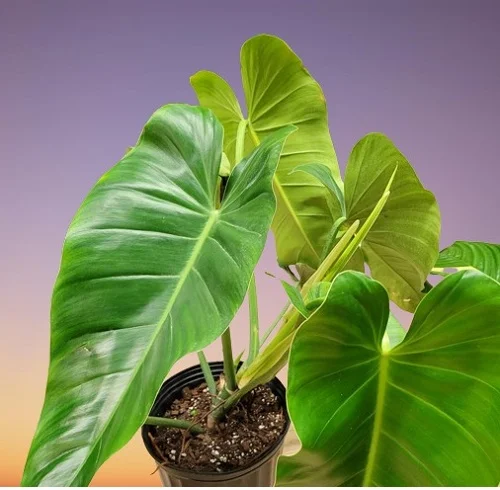
Philodendron domesticum commonly called Spadeleaf Philodendron or Burgundy Philodendron is an evergreen climber which bears long, glossy, spade-shaped leaves and reddish-purple stems.
Burgundy Philodendron can grow to a height of 8 feet and 3 feet wide when grown indoors. The mature leaves are about 2 feet long and 1 feet wide. On account of its size and delightful foliage, it is ideal for creating a great first impression.
Philodendron domesticum performs best in bright indirect light, warmth of 15-270C, humidity of 60-70% and moderately moist, fertile, well-drained soil coupled with monthly feeding in spring and summer.
6. Philodendron hastatum
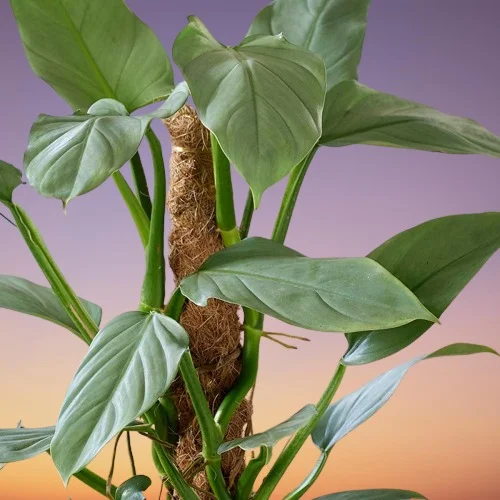
Philodendron hastatum commonly called Silver Sword Philodendron is a captivating, evergreen climber which bears glossy, large, sword-shaped leaves with a silver sheen.
Silver Sword Philodendron can grow to a height of 5 feet. On account of its size and magnificent foliage, Philodendron hastatum is among favorite plants for the home and will create a spectacular sight in any space.
Philodendron hastatum flourishes in bright indirect light (filtered light), warmth of 18-270C, humidity of 60-70% and moderately moist, fertile, well-drained soils coupled with monthly feeding in the growing season.
7. Philodendron ilsemanii Variegata
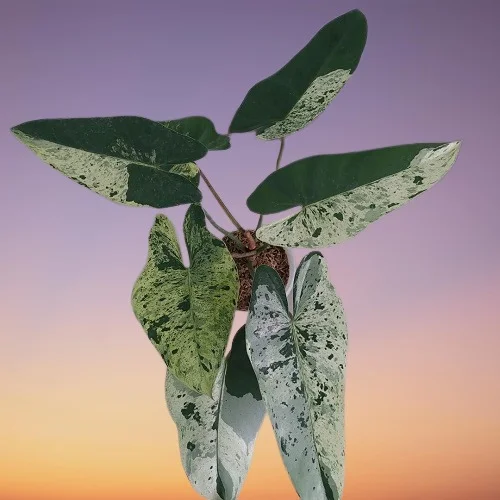
Philodendron ilsemanii Variegata also called Mottled Ilsemanii is an evergreen climber which bears slender, large, pointed leaves with green and white variegation and emerge in deep-green, developing the variegation as they continue to grow. The variegation varies from leaf to leaf.
On account of its growth habits and spectacular foliage, Mottled Ilsemanii is a great conversation starter in any space.
Philodendron ilsemanii Variegata grows best in bright indirect light, warmth of 20-280C, humidity of 60-70% and moderately moist, fertile, well-drained soils coupled with regular feeding in spring and summer. Learn how to grow and care for Philodendron ilsemanii Variegata.
8. Philodendron sagittifolium
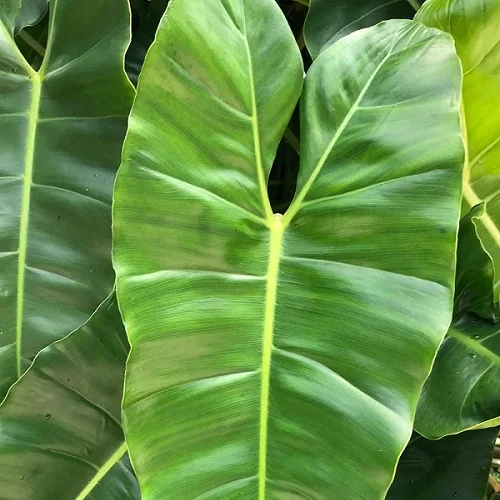
Philodendron sagittifolium commonly called Arrowhead Philodendron is a vigorously-growing climber whose large, arrow-shaped leaves are pale green on top and the undersides are dark-green with light green spots.
The spectacular Philodendron sagittifolium is a drought-tolerant plant which can grow to a height of 10 feet in a few months. The leaves are about 24 inches long by 12 inches wide. It is among large-leafed plants that make a bold statement in any space.
Philodendron sagittifolium prospers in bright indirect light, warmth of 18-250C, humidity of 60-70% and moderately moist, rich, well-drained soil coupled with monthly feeding in the growing season. Learn how to grow and care for Philodendron sagittifolium.
9. Philodendron selloum
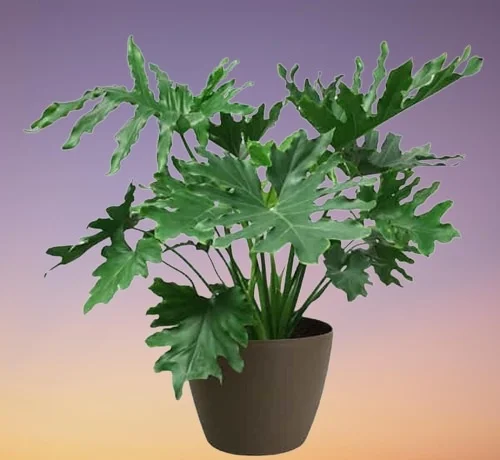
Philodendron selloum commonly called Lacy Tree Philodendron or Horsehead Philodendron is a non-climbing plant with simple, large, deeply-lobed, ruffle-edged, drooping, dark-green leaves and is most impressive in a large space as a bold statment plant.
Philodendron selloum also known by the botanical names Thaumatophyllum bipinnatifidum and Philodendron bipinnatifidum can grow to a height of 5-6 feet. The leaves can grow up to 2 feet long and are attached to long smooth petioles about 2 feet long. It is one of the popular tree-like plants ideal for elevating the home value.
Lacy Tree Philodendron thrives in medium to bright indirect light, warmth of 18-260C, humidity of 55-65% and moderately moist, rich, well-drained soil coupled with monthly feeding in the growing season. Learn how to grow and care for Philodendron selloum.
10. Philodendron selloum 'Sun Red'
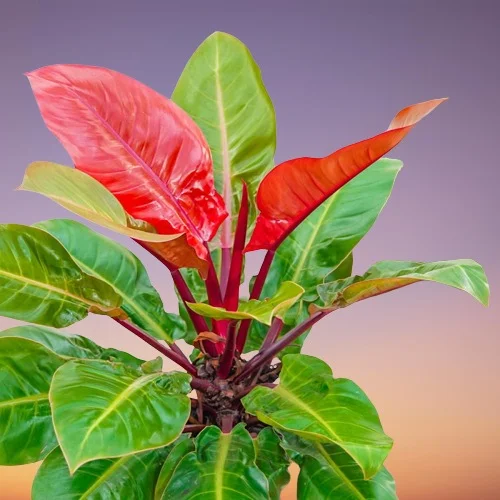
Philodendron selloum 'Sun Red' is an enchanting, upright, clumping (non-climbing) plant whose large, oval, leathery leaves start off bright red, then burgundy or red-purple and eventually green when mature.
Sun Red Philodendron can grow to a height of 8-10 feet but when grown indoors it rarely exceeds 4-5 feet high by the same width.
Philodendron Sun Red requires bright indirect light, warmth of 18-260C, humidity of 60-70% and moderately moist, rich, well-drained potting soils coupled with monthly feeding in spring and summer. Learn how to grow and care for Philodendron Sun Red.
11. Philodendron burle-marxii
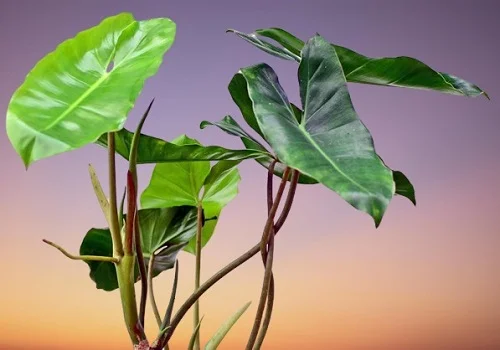
Philodendron burle-marxii is a fast-growing, low maintenance plant with glossy, leathery, emerald-green, cordate leaves which is perfect climbing on a moss pole.
It is named after Robert Burle Marx (1909-1994), the Brazilian Landscape Artist whose designs of parks and gardens made him world-famous.
Philodendron burle-marxii is native to South America from Colombia to Ecaudor. It can grow as a creeper, spreading on the ground or as a vining climber on a moss pole. The plant can grow to a height of 2 feet and about 4 feet wide.
12. Philodendron melanochrysum
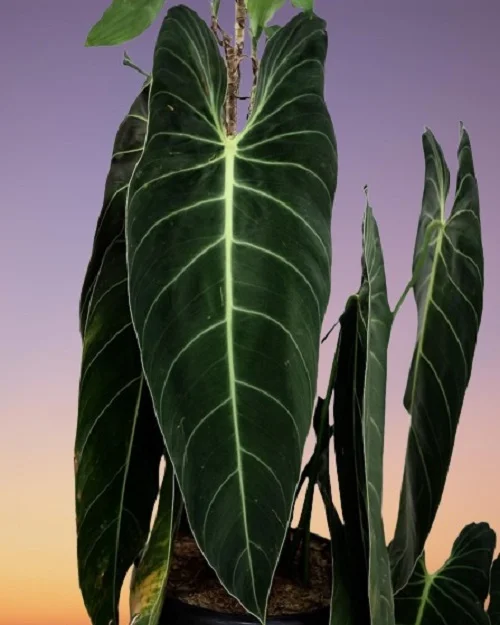
Philodendron melanochrysum also called Philodendron Black Gold is a climbing plant which bears large velvety heart-shaped leaves with tiny golden sparkles in bright light.
The emerging leaves have a copper-gold velvety sheen but as they mature, they become blackish-green with pale green veins. The name 'melanochrysum' means 'black gold' in reference to the tiny gold sparkles on adult plants which appear in sunlight.
Philodendron Black Gold is native to South America in the Andean foothills of Colombia. It can grow to a height of 12 feet and 8 feet wide in its natural habitat. When grown indoors it grows to a height of about 8 feet and 3-5 feet wide.
13. Philodendron verrucosum
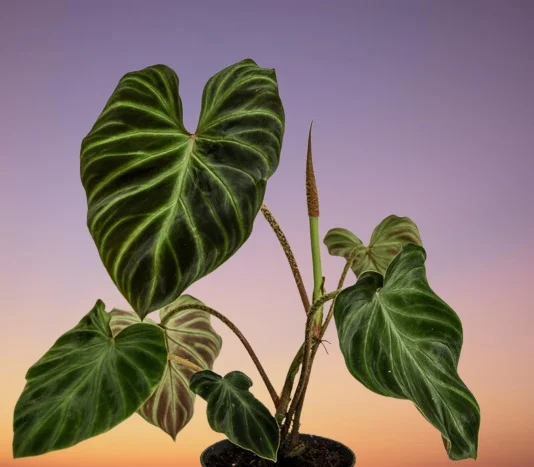
Philodendron verrucosum commonly called Ecaudor Philodendron is a vining plant native to Costa Rica, Panama, Colombia, Ecaudor and Peru.
The leaves are large, heart-shaped with slightly wavy edges, white veins and reddish undersides. The stems have hairy bristles.
The magnificent Philodendron verrucosum can grow to a height of 3 feet and 2 feet wide. It is a finicky Philodendron as it does tolerate wide variations in growing conditions.
14. Philodendron gloriosum
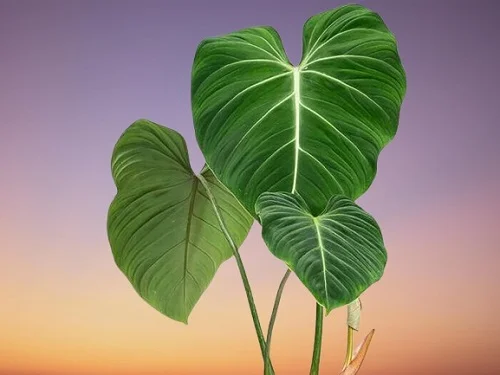
Philodendron gloriosum is a crawling terrestial plant whose leaves are heart-shaped with a velvety surface, pink margins and pale-green, white or pinkish veins.
It is native to Colombia where it creeps on the forest floors. This Philodendron is listed as a vulnerable plant due to the destruction of its natural habitat for farming activities.
The Philodendron gloriosum has many cultivars like 'Dark Form', 'Zebra', 'Pink Back', 'Round Form' and Variegated Philodendron gloriosum.
15. Philodendron mamei
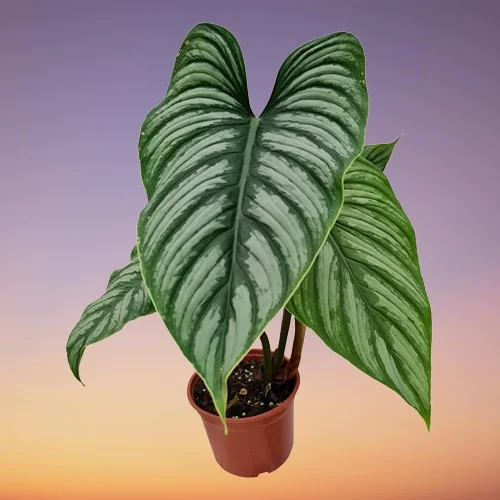
Philodendron mamei is a low-maintenance, terrestial species with a creeping growth habit and prostrate stems.
The matte, dark-green, heart-shaped leaves have silver markings and deep veins giving the leaves a ridged appearance. These make Philodendron mamei one of the most beautiful Philodendrons.
Philodendron mamei is native to Ecaudor and Peru. It was first collected by Europeans in 1882. The plant has become an invasive species to the Cook Islands and Society Islands.
16. Philodendron mayoi
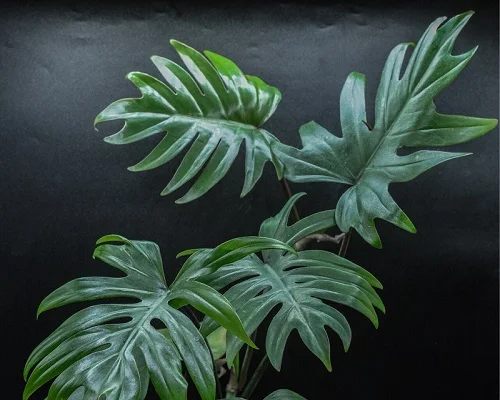
Philodendron mayoi commonly called Fern-like Philodendron or Palm-like Philodendron is an easy-care, rare, perennial plant native to Brazil.
Fern-like Philodendron bears deeply lobed, bright-green, rubbery leaves, about 7 inches long with 6 lobes on either side of the leaf blade and look like a palm frond.
The plant is named in honor of an aroid botanist, Dr. Simon Mayo. It can grow to a height of about 2-4 feet in bright indirect light and warm, humid conditions.
17. Philodendron rugosum
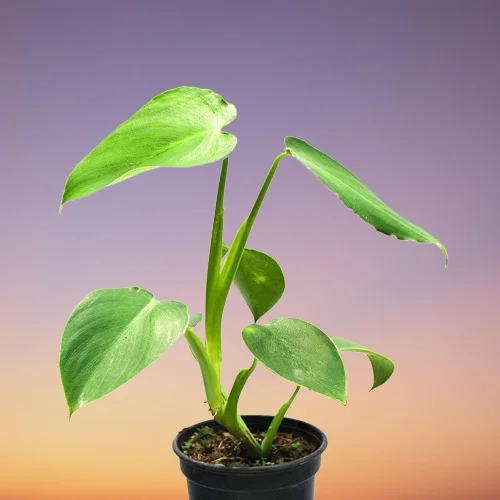
Philodendron rugosum also called Pigskin Philodendron or Sow's Ear Plant is rare, low maintenance, climbing plant with thick, leathery, heart-shaped leaves and hence the common name, 'Pigskin Philodendron'.
The leaves wrinkle up (fold) as they attach to the stem like Pig's ears and hence the common name, 'Sow's Ear Plant'. The name 'rugosum' comes from 'ruga' which is Italian for 'wrinkle' in reference to the wrinkling of the leaves as they meet the stems.
Pigskin Philodendron is native to the montane forests of Ecaudor. The plant is endangered in its native habitat due to destruction of the same to farming. It can grow to a height of 10-15 feet, therefore, requiring support by a moss pole.
18. Philodendron brandtianum
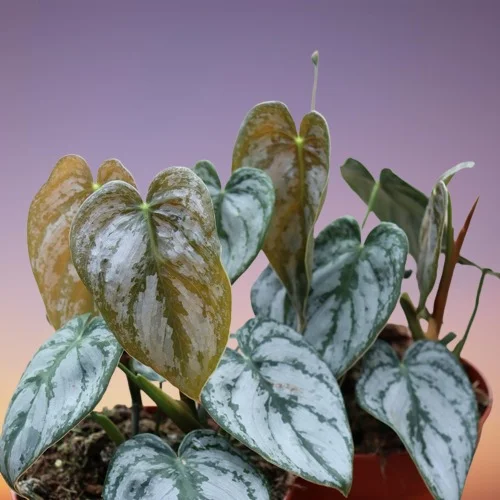
Philodendron brandtianum commonly called Silver Leaf Philodendron or Brandi Philodendron is a low maintanace, bushy climber which bears heart-shaped leaves with heavy silver variegation on a dark-green background.
The Brandi Philodendron is native to southern Colombia, northern Brazil and Bolivia where it grows as an epiphyte on trees.
Philodendron brandtianum can grow to a height of 4-5 feet in medium to bright indirect light. The plant is often mistaken for Scindapsus pictus (Silver Satin Pothos).
19. Philodendron bipennifolium
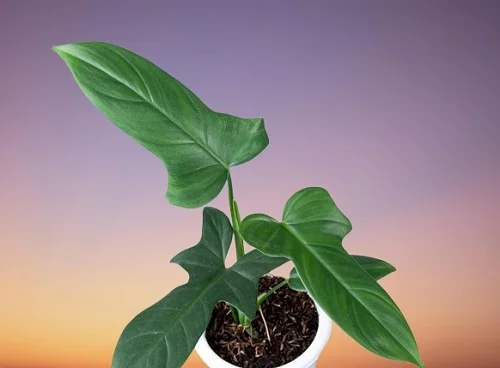
Philodendron bipennifolium also called Fiddleleaf Philodendron is a rare, vining (climber) plant native to the tropical rainforests of Brazil, Argentina, Bolivia and Paraguay where it grows as a hemiepiphyte.
The leaves on Fiddleleaf Philodendron are gloss, leathery, lobed, elongated about 18 inches long and have a fiddle or horse-head shape.
Philodendron bipennifolium is a climber ideal for a hanging basket where the spectacular leaves can be displayed or it can be supported with a moss stick to grow upright.
20. Philodendron pandurifome
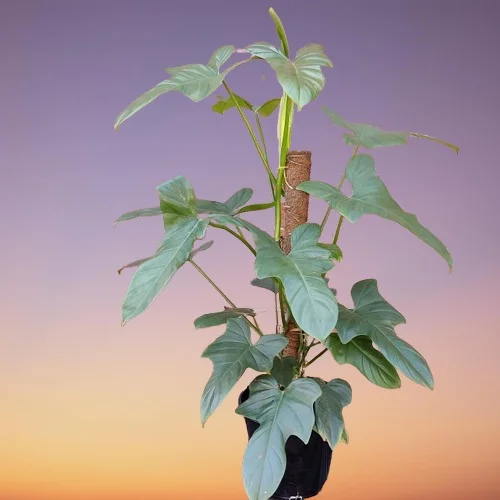
Philodendron pandurifome also called Philodendron Panda, Panda Plant or Wolf's Head Philodendron is a rare, easy-care, climbing plant native to Brazil, Guyana, Eucador, Colombia and Venezuela.
The leaves in Philodendron Panda are three-lobed, fiddle-shaped, dark-green with more rounded tips. The stems are green colored.
Philodendron pandurifome can grow to a height of about 6-8 feet. It needs to be provided with a moss pole to grow upright and develop large leaves.
Philodendron Varieties Quick Reference Chart
| Variety | Growth habit | Leaf Shape & Features | Standout Trait | Best Display |
|---|---|---|---|---|
| 1. Heartleaf | Vining & climbing | Heart-shaped, green leaves. Cultivars; 'Micans', 'Brasil', 'Cream Splash', 'Lemon Lime'. | Highly adaptable | Hanging basket, shelf |
| 2. Summer Glory | Self-heading & upright | Large, deeply-veined leaves with a prominent red leaf margin. | Leaves emerge reddish-bronze and turn deep green. | Moss pole |
| 3. Finger-leaf or Skeleton Key | Self-heading & upright | Deeply divided and incised glossy green leaves. | Mimics the appearance of a palm frond. | Moss pole |
| 4. Erubescens | Vining & climbing | Large, heart-shaped leaves; emerge reddish and mature to dark green. | Vigorously-growing red stems. | Moss pole |
| 5. Spadeleaf | Vining & climbing | Long, glossy, spade-shaped leaves on reddish-purple stems. | Reaches up to 8 feet tall indoors. | Moss pole, trellis |
| 6. Silver Sword | Vining & climbing | Large, elongated, sword-shaped leaves. | Striking metallic silver sheen. | Moss pole |
| 7. Ilsemanii Variegata | Vining & climbing | Slender, large, pointed leaves with varied green and white marbling. | Highly unstable, unique variegation per leaf. | Moss pole, trellis |
| 8. Sagittifolium | Vining & climbing | Gigantic arrow-shaped leaves, pale green tops with spotted undersides. | Drought-tolerant and grows up to 10 feet fast. | Moss pole |
| 9. Selloum | Self-heading & upright | Massive, deeply-lobed, ruffle-edged, drooping dark green leaves | Tree-like (5–6 feet tall) with long petioles. | Deep, heavy pot |
| 10. Selloum Sun Red | Self-heading & upright | Large, oval, leathery leaves in a compact footprint. | Leaves start off bright red, then burgundy or red-purple and eventually green on maturity. | Heavy pot |
| 11. Burle-marxii | Terrestrial & creeping | Glossy, leathery, emerald-green, cordate (heart-shaped) leaves. | Versatile: can trail, climb a pole, or carpet the ground. | Moss pole, wide planters |
| 12. Melanochrysum | Vining & climbing | Large, velvety, heart-shaped leaves with pale green veins. | Leaves have tiny gold sparkles in bright light. | Moss pole |
| 13. Verrucosum | Vining & climbing | Heart-shaped with wavy edges, white veins, and reddish undersides. | Distinctly hairy or bristly stems; finicky. | Moss pole, terrarium |
| 14. Gloriosum | Terrestrial & creeping | Heart-shaped leaves with a rich, velvety surface and pink leaf margins. | Striking white/pinkish veins; listed as vulnerable. | Terrariums, wide planters |
| 15. Mamei | Terrestrial & creeping | Large, matte, dark-green, heart-shaped leaves. | Heavy silver markings and deeply ridged veins. | Wide planters, terrariums |
| 16. Mayoi | Terrestrial & creeping | Deeply lobed, bright-green, rubbery leaves; 6 deep lobes on each side. | Named after Dr. Simon Mayo; looks like a fern or palm. | Hanging basket, moss pole |
| 17. Rugosum | Vining & climbing | Thick, leathery, wrinkled heart-shaped leaves. | Leaves fold where they meet the stem like pig ears | Moss pole |
| 18. Brandtianum | Vining & climbing | Heart-shaped leaves with dense olive-green and silver variegation. | Looks like Silver Satin Pothos. | Shelf, moss pole |
| 19. Bipennifolium | Vining & climbing | Elongated, glossy, and heavily lobed leaves (18 inches long). | Shaped uniquely like a fiddle or horse-head. | Moss pole |
| 20. Pandurifome | Vining & climbing | Dark green, 3-lobed, fiddle-shaped leaves with rounded tips. | Green stems (unlike the red stems of others). | Moss pole, trellis |
Frequently Asked Questions (FAQs)
1. How many types of Philodendrons are there?
There are about 500 species of Philodendrons. Numerous hybrids and rare varieties continue to emerge. Currently, growers cultivate around 50–70 Philodendron types indoors.
2. What are the different types of Philodendrons?
Philodendrons are classified into climbing (vining) Philodendrons, self-heading (upright) Philodendrons, variegated Philodendrons and rare or collector Philodendron species. They differ in growth habit, leaf shape and indoor care requirements.
3. What is the difference between climbing and self-heading Philodendrons?
Climbing Philodendrons grow as trailing vines and require support like a moss pole, while self-heading Philodendrons grow upright in a compact form and do not climb.
4. Are Philodendrons toxic to pets?
Yes. Philodendrons are toxic to cats and dogs if ingested due to calcium oxalate crystals. They should be kept out of reach of pets and small children.
5. Which Philodendron varieties are best for beginners?
The beginner-friendly Philodendrons include Philodendron hederaceum, Philodendron scandens, Philodendron Brasil and Philodendron Imperial Green due to their tolerance for low light and irregular watering.
6. Can Philodendrons grow in low light?
Yes, many Philodendron types can grow in low-light indoor conditions, especially green-leaf varieties. However, variegated types require brighter light to maintain their leaf patterns.
7. Are Philodendrons fast-growing plants?
Most Philodendrons are moderate to fast growers, especially climbing varieties. Growth speed depends on light, temperature, humidity and overall care.
8. Can different types of Philodendrons be grown together?
Yes, multiple Philodendron types can be grown together if they share similar light, humidity and watering requirements, making them ideal for indoor plant groupings.
9. Are variegated Philodendrons harder to care for?
Variegated Philodendrons generally need brighter indirect light than green varieties to maintain their variegation. While not difficult, they grow much slower and require consistent lighting to prevent reversion.
10. Which is the rarest type of Philodendron?
Some of the rarest Philodendron types include Philodendron spiritus-sancti, Philodendron tortum, and Philodendron verrucosum. These varieties are highly sought after due to limited availability and their unique foliage.