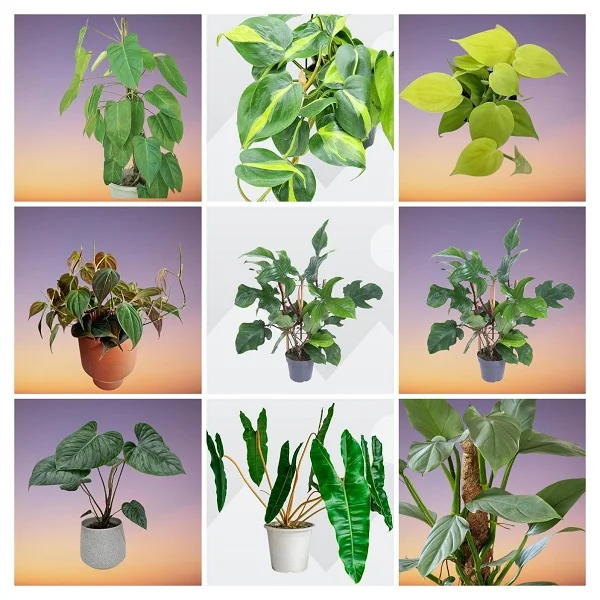
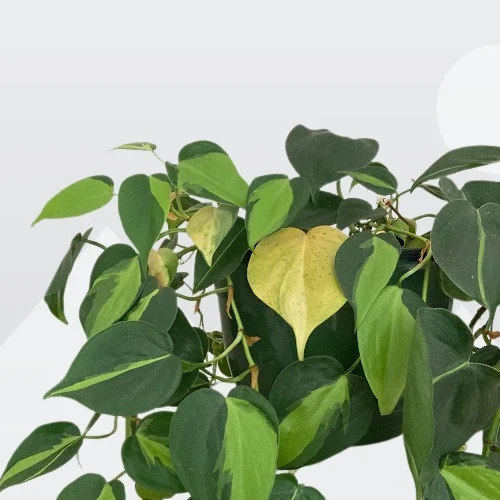
17 Self-heading Philodendron Varieties You Need to Know with Names and Pictures
Some links in this post may be affiliate links
What Is a Self-heading Philodendron?
Self-heading Philodendrons grow in a rosette-like pattern, producing new leaves from a central growing point that remains close to the soil. The result is a full, architectural plant that commands attention.
Unlike the Vininig Philodendron types, Self-heading Philodendrons do not require any support like a moss pole or a trellis to grow upright. The Self-heading types tend to be slower-growing and more compact, making them ideal for shelves, tabletops and statement corners in any room.
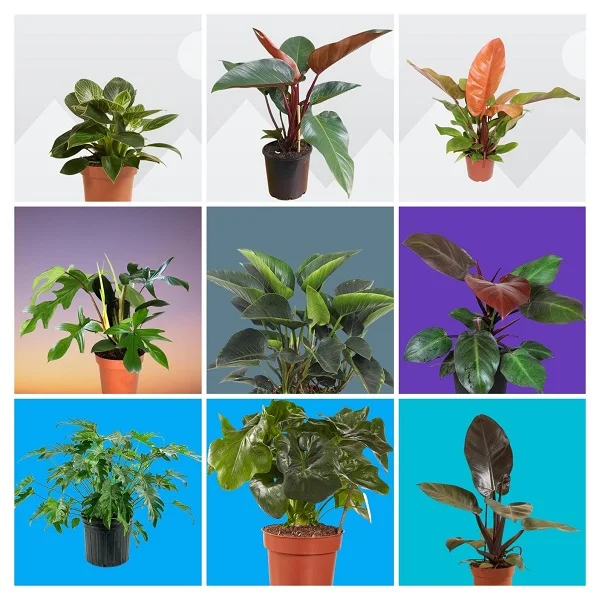
Self-heading Philodendrons are popular plants among indoor gardeners because they are generally low-maintenance, visually dramatic and incredibly diverse. Whether you are drawn to deep tones, variegated leaves or enormous tropical foliage, there is a self-heading variety to match your aesthetic.
In this guide, we cover 17 of the best Self-heading Philodendron Varieties, complete with key characteristics, care requirements and what makes each one special, so that you can find the perfect match for your space.
As you make your selection, keep in mind that all Philodendron Pants are toxic to both humans and pets. As stated by National Capital Poison Center, Philodendron varieties contain Calcium oxalate crystals which if ingested can cause burning and swelling in the mouth and throat, vomiting, diarrhea and abdominal pains. Therefore, always wear gloves when handling these plants and keep them away from the reach of children and pets.
That not withstanding, Philodendron Varieties are magnificient plants which symbolize health and abundance. If you are looking to add Philodendron to your collection, you may acquire these plants online from Amazon (Link to Amazon) or from Etsy (Link to Etsy). We have herebelow a list of 17 Self-heading Philodendron Varieties.
17 Best Self-Heading Philodendrons with Pictures
The best Self-Heading Philodendron Types are Philodendron Birkin, Philodendron Rojo Congo, Philodendron Green Congo, Philodendron Prince of Orange, Philodendron Summer Glory, Lacy Tree Philodendron, Philodendron Sun Red, Philodendron Moonlight among others.
1. Philodendron Birkin
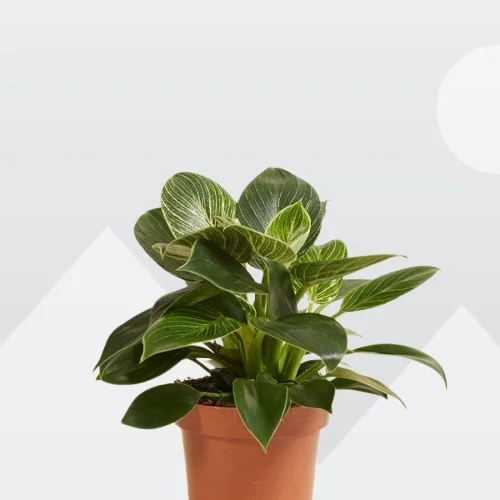
Botanical name: Philodendron 'Birkin'
Common names: Birkin Philodendron, White Wave
Light: Bright indirect light
Water: Water when the top 1-2 inches of soil feel dry
Growth: Slow grower, 3 feet
Best for: Intermediate growers
Philodendron Birkin is a striking hybrid known for its deep-green, oval leaves striped with elegant white or cream pinstripes. No two leaves carry exactly the same pattern. It is a relatively recent cultivar and has become a collector favourite. Maintain bright indirect light to maintain the variegation; the pattern can revert to green or shift to half-moon variegation.
2. Philodendron Rojo Congo
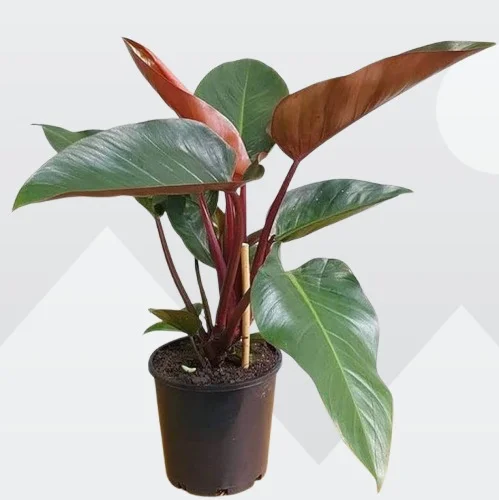
Botanical name: Philodendron tatei 'Rojo Congo'
Common names: Rojo Congo Philodendron, Red Congo
Light: Medium to bright indirect light
Water: Water when the top 2-3 inches of soil feel dry
Growth: Slow growth, 2-4 feet
Best for: Beginners and intermediate growers
Philodendron Rojo Congo is one of the most popular self-heading Philodendrons on account of its large, oval leaves which emerge in a deep, burgundy-red before maturing to a dark, glossy green. The red tones persist on the undersides and along the stems, giving the plant a rich look year-round. It tolerates lower light better than most and is very forgiving for beginners.
3. Philodendron Green Congo
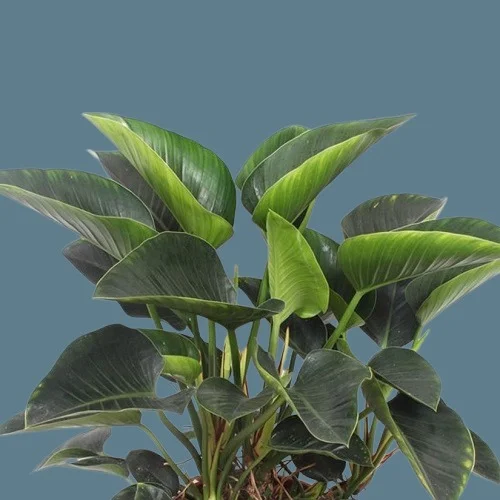
Botanical name: Philodendron tatei 'Green Congo'
Common name: Congo Green Philodendron
Light: Bright indirect light
Water: Water when the top 1-2 inches dry
Growth: Moderate grower, 3-4 feet
Best for: Beginner and intermediate growers
Philodendron Green Congo is one of the the most adaptable and beginner-friendly Self-heading Philodendrons. It produces large, oval, glossy, green leaves in a tidy rosette and is remarkably tolerant of a wide range of indoor conditions. It is susceptible to overwatering, so always check the soil before adding more water.
4. Philodendron Prince of Orange
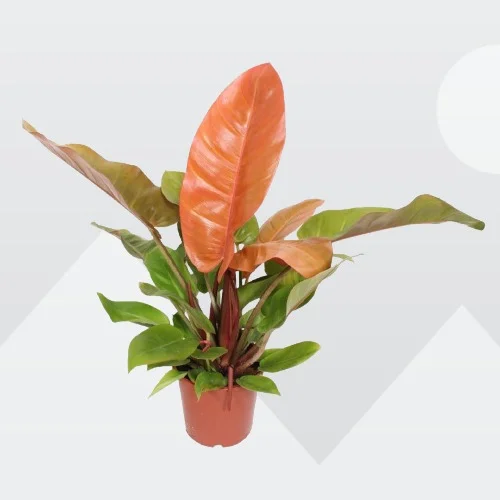
Botanical name: Philodendron erubescens 'Prince of Orange'
Common name: Philodendron Prince of Orange
Light: Bright indirect light
Water: Water when the top 1-2 inches of soil dry
Growth: Moderate growth, 2-3 feet
Best for: Intermediate growers
Prince of Orange displays a colour theatre; new leaves emerge in a vivid burnt orange or copper hue, gradually shifting through yellow-green before settling into a deep, mature green. At any given time, the plant displays a stunning spectrum of colours simultaneously.
5. Philodendron Summer Glory
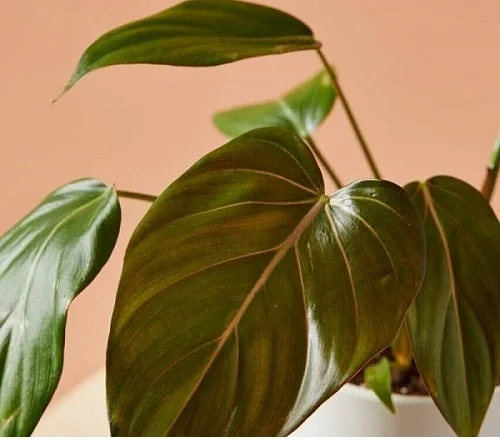
Botanical name: Philodendron gloriosum 'Summer Glory'
Common name: Philodendron Summer Glory
Light: Bright indirect light
Water: Water when the top 2 inches of soil feel dry
Growth: Moderate grower, 3-4 feet
Best for: Intermediate growers
Philodendron Summer Glory is a cross between an unnamed Bob McColley Philodendron hybrid and Philodendron gloriosum. It bears large, deeply-veined leaves which start off reddish-bronze and turn deep-green with a red leaf margin as they mature. Learn how to grow and care for Philodendron 'Summer Glory'.
6. Lacy Tree Philodendron
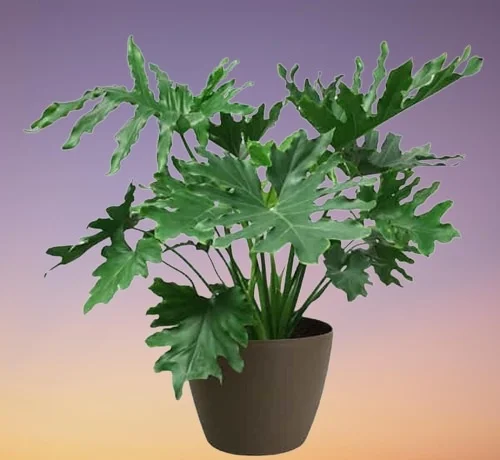
Botanical names: Philodendron selloum, Thaumatophyllum bipinnatifidum, Philodendron bipinnatifidum
Common names: Lacy Tree Philodendron, Horsehead Philodendron
Light: Medium to bright indirect light
Water: Water when the top 2 inches dry
Growth: Moderate grower, 5-6 feet
Best for: Beginners and intermediate growers
Lacy Tree Philodendron is a favored plant with simple, large, deeply-lobed, ruffle-edged, drooping, dark-green leaves and is most impressive in a large space as a bold statment plant. The leaves can grow up to 2 feet long and are attached to long, smooth petioles about 2 feet long. Learn how to grow and care for Lacy Tree Philodendron.
7. Philodendron Sun Red
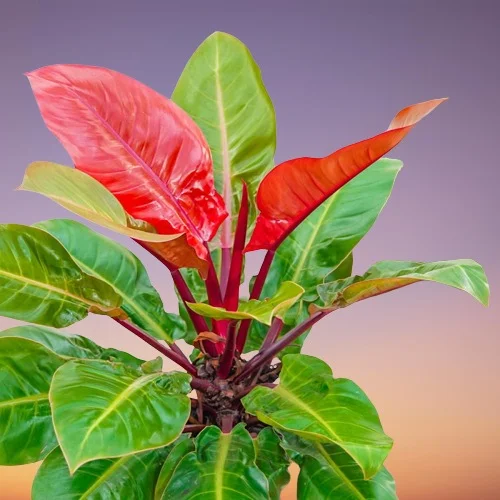
Botanical name: Philodendron selloum 'Sun Red'
Common names: Philodendron Sun Red, Red Sun Philodendron
Light: Bright indirect light
Water: Water when the top 2 inches of soil are dry
Growth: Moderate grower, 4-5 feet indoors
Best for: Intermediate growers
Philodendron Sun Red is a vibrant plant whose large, oval, leathery leaves start off bright red, then burgundy or red-purple and eventually green when mature. On account of its size and spectacular foliage, it is a spectacular bold statement plant for any space. Learn how to grow and care for Philodendron Sun Red.
8. Philodendron Moonlight
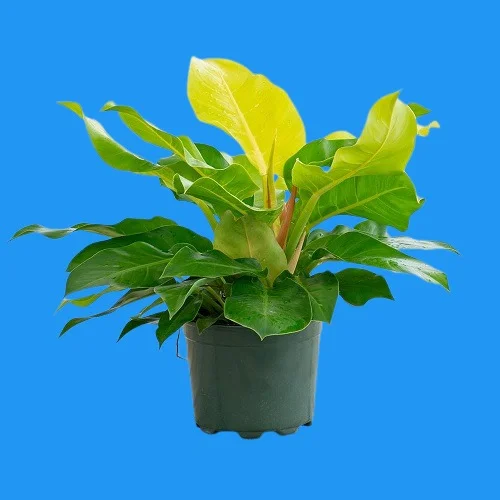
Botanical name: Philodendron erubescens 'Moonlight'
Common name: Moonlight Philodendron
Light: Bright indirect light
Water: Allow the top 1–2 inches of soil to dry between waterings
Growth: Moderate grower, 1-2 feet
Best for: Beginner and intermediate growers
Philodendron Moonlight lives up to its name with chartreuse-to-lime-green foliage that seems to glow from within. New leaves emerge in a vivid, almost fluorescent yellow-green before maturing to a cooler medium green.
9. Philodendron Imperial Red
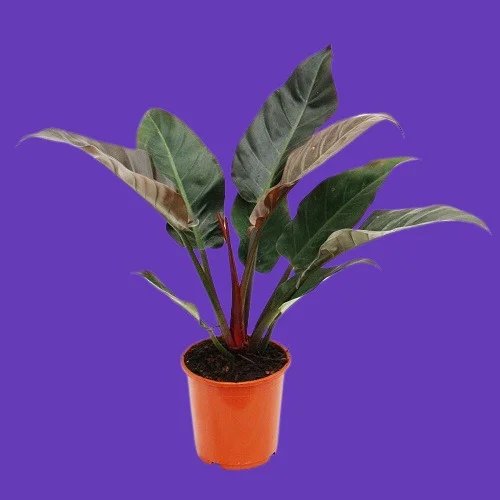
Botanical name: Philodendron erubescens 'Imperial Red'
Common name: Red Imperial Philodendron
Light: Bright indirect light, at least 6 hours for vibrant leaf color
Water: Allow top 1–2 inches to dry
Growth: Moderate grower, 2-3 feet
Best for: Intermediate growers
Philodendron Imperial Red produces leaves that emerge in a dramatic deep red or burgundy before maturing to a dark-green with reddish undersides. It is a bold, eye-catching variety that pairs beautifully with light-coloured interiors.
10. Philodendron Imperial Green
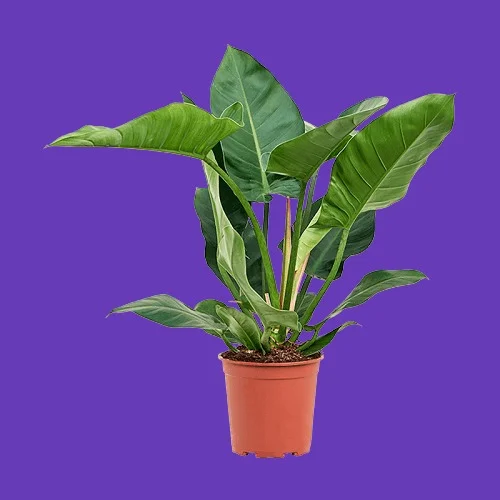
Botanical name: Philodendron erubescens 'Imperial Green'
Common name: Imperial Green Philodendron
Light: Medium to bright indirect light
Water: Allow the top 1–2 inches of soil to dry
Growth: Moderate growth, reaching about 3-4 feet
Best for: Beginners and Intermediate growers
Philodendron Imperial Green is among the most tolerant of low-light and neglect. If you are looking for a bold, architectural statement plant that is practically indestructible, the Imperial Green is your answer. Its large, deeply glossy leaves are a rich, uniform forest green. Wipe leaves regularly as their glossy surface shows dust easily and clean leaves photosynthesize more efficiently.
11. Philodendron McColley's Finale
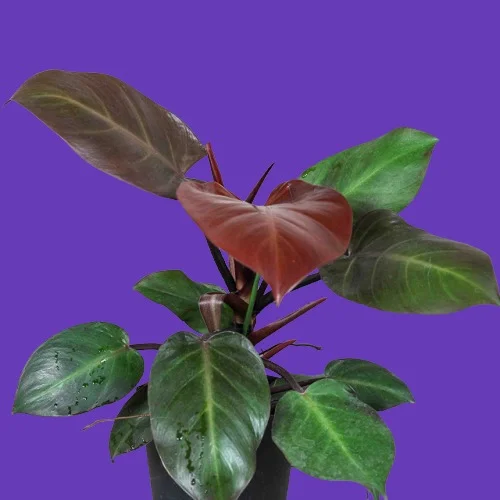
Botanical name: Philodendron erubescens 'McColley's Finale'
Common name: McColley Finale
Light: Medium to bright indirect light
Water: Water when the top 1-2 inches of soil dry
Growth: Slow-growing, reaches 3 feet
Best for: Intermediate growers
Philodendron McColley's Finale is a compact hybrid with a particularly impressive colour show. New leaves unfurl in a warm orange-red before transitioning through shades of bronze and copper to a rich, dark green at maturity. It is similar in spirit to the Prince of Orange but tends to have darker, more saturated colouring. Provide bright indirect light to encourage the best colour transitions in new leaves.
12. Philodendron Xanandu
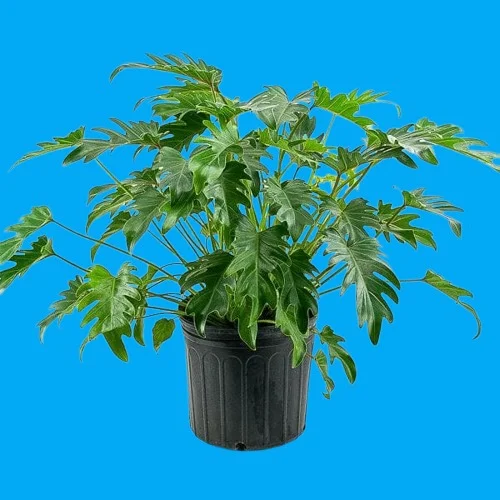
Botanical name: Thaumatophyllum Xanadu
Common names: Philodendron xanandu, Winterbourn
Light: Medium to bright indirect light
Water: Allow the top 2-3 inches to dry between waterings
Growth: Moderate grower, 4-5 feet
Best for: Beginners and intermediate growers
Though reclassified into the Thaumatophyllum genus, Philodendron Xanandu remains one of the most beloved and recognisable Self-heading Philodendrons. Its deeply lobed, leathery leaves create a feathery, tropical silhouette that is quite unlike any other variety. Winterbourn is a tough plant that tolerates brief periods of drought.
13. Philodendron Atom
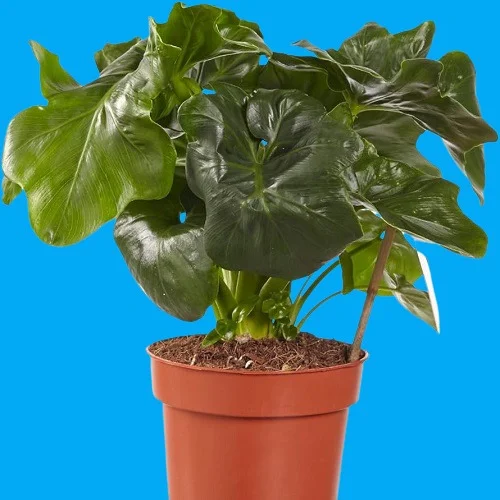
Botanical name: Philodendron 'Atom'
Common name: Super Atom Philodendron
Light: Medium to bright indirect light
Water: Water when the top 2 inches of soil feel dry
Growth: Moderate grower, 1-2 feet
Best for: Beginners and intermediate growers
Philodendron Atom is a dwarf variety of Philodendron selloum. It features deeply lobed, waxy and heavily ruffled deep-green leaves. On the basis of its compact, bushy growth habit, Super Atom Philodendron is perfect for desks, windowsills and small apartments. It tolerates lower humidity than many philodendrons.
14. Philodendron Pluto Green
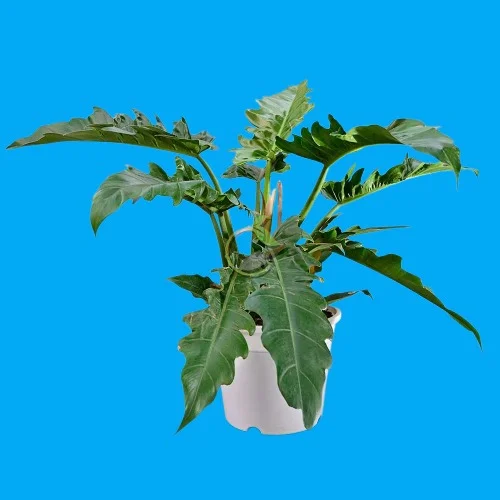
Botanical name: Philodendron 'Pluto Green'
Common name: Pluto Green Philodendron
Light: Medium to bright indirect light
Water: Allow top 1-2 inches to dry
Growth: Moderate grower, 3-4 feet
Best for: Beginners and intermediate growers
Philodendron Pluto Green is a compact hybrid that produces dense, lobed foliage similar to the Xanadu but on a smaller, more manageable scale. Its glossy, dark green leaves have a pleasingly architectural quality that suits modern and minimalist interiors. It can tolerate some drought but prefers consistently moist, well-draining soil.
15. Philodendron Black Cardinal
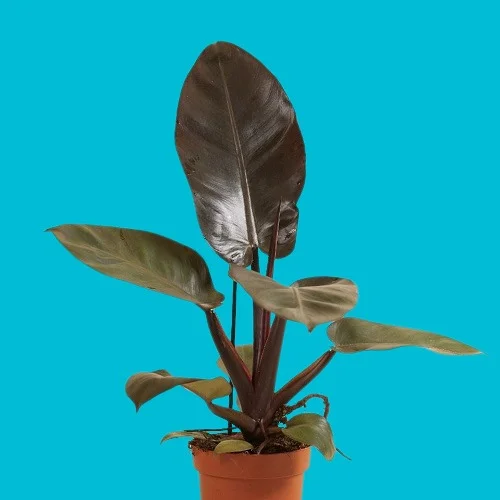
Botanical name: Philodendron erubescens 'Black Cardinal'
Common names: Philodendron Black Cardinal
Light: Bright indirect light with some morning sunlight to enhance leaf color
Water: Water when the top 1–2 inches feel dry
Growth: Slow-growing, 3-4 feet
Best for: Beginners and intermediate growers
Philodendron Black Cardinal is an easy-care plant with large, color-changing leaves. The new leaves emerge in shades of burgundy, change to green and then deep burgundy-black as they mature.
16. Philodendron Green Princess
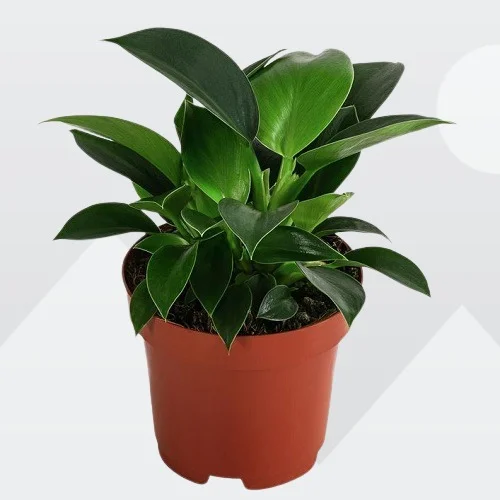
Botanical name: Philodendron mia
Common name: Philodendron Green Princess
Light: Medium to bright indirect light
Water: Allow the top 1–2 inches to dry between waterings
Growth: Moderate, 10 inches tall
Best for: Beginner and intermediate growers
Philodendron Green Princess is a compact, small-sized, low-mainteance plant which features glossy, oval, emerald-green leaves. On account of its size, Green Princess is perfect for a table-top, desktop, shelf or a window sill.
17. Philodendron Golden Crocodile
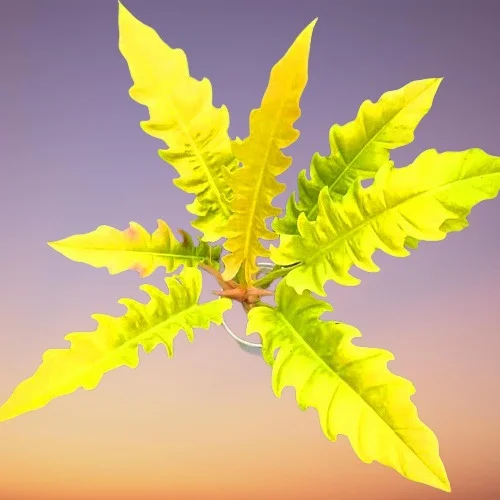
Botanical name: Philodendron pinnatifidum x melinonii
Common name: Philodendron Golden Crocodile
Light: Bright indirect light
Water: Allow the top 2-3 inches of soil to dry between waterings
Growth: Moderate, 3-4 feet
Best for: Beginner and intermediate growers
Philodendron Golden Crocodile is a low-maintenance hybrid plant with golden-green foliage and deeply serrated, crocodile-like edges. New leaves emerge with a bronze tint, turning bright yellow-green (neon), eventually fading to deep green.
How to Propagate Self-heading Philodendrons
Unlike Vining Philodendron Varieties which are easily propagated from stem cuttings either in water or in soil, Self-heading Philodendrons are propagated by the following methods:
- Offset division: Many self-heading varieties produce offsets (pups) at the base. These can be carefully separated and potted individually when they have their own roots.
- Stem cuttings with a node: Some self-heading types do produce short stems that can be cut below a node and rooted in moist sphagnum moss or perlite.
- Tissue culture: Many commercial varieties (like Birkin and Prince of Orange) were developed and are propagated via tissue culture, which is not practical at home. Learn how to propagate Philodendrons in 4 Easy Ways.
Self-heading Philodendrons Quick Reference Chart
| Variety | Difficulty | Light needs | Growth rate | Maximum Size |
|---|---|---|---|---|
| 1. Birkin | Intermediate | Bright indirect | Slow | 3 feet |
| 2. Rojo (Red) Congo | Beginner | Medium-bright indirect | Slow | 2-4 feet |
| 3. Green Congo | Beginner | Bright indirect | Moderate | 3-4 feet |
| 4. Prince of Orange | Beginner | Bright indirect | Moderate | 2-3 feet |
| 5. Summer Glory | Intermediate | Bright indirect | Moderate | 3-4 feet |
| 6. Lacy Tree | Beginner | Medium-bright indirect | Moderate | 5-6 feet |
| 7. Sun Red | Intermediate | Bright indirect | Moderate | 4-5 feet |
| 8. Moonlight | Beginner | Bright indirect | Moderate | 1-2 feet |
| 9. Imperial Red | Intermediate | Bright indirect | Moderate | 2-3 feet |
| 10. Imperial Green | Beginner | Medium-bright indirect | Moderate | 3-4 feet |
| 11. McColley's Finale | Intermediate | Medium-bright indirect | Slow | 3 feet |
| 12. Xanandu | Beginner | Medium-bright indirect | Moderate | 4-5 feet |
| 13. Atom | Beginner | Medium-bright indirect | Moderate | 1-2 feet |
| 14. Pluto Green | Beginner | Medium-bright indirect | Moderate | 3-4 feet |
| 15. Black Cardinal | Beginner | Bright indirect | Moderate | 3-4 feet |
| 16. Green Princess | Beginner | Medium-bright indirect | Moderate | 10 inches |
| 17. Golden Crocodile | Beginner | Bright indirect | Moderate | 3-4 feet |
Frequently Asked Questions (FAQs)
1. What does self-heading mean in Philodendrons?
Self-heading is where the Philodendron produces new leaves from a central, stationary growing point at or near the soil surface, forming a rosette or bush shape. It does not send out long climbing or trailing stems, making it compact and free-standing without any need for support.
2. How do I know if my Philodendron is Self-heading or Vining/Climbing?
Self-heading Philodendrons grow in a compact, upright rosette form from a central growing point close to the soil. They do not produce long climbing stems. Vining philodendrons produce long stems that trail or climb, and usually need a support structure like a moss pole or are displayed in hanging baskets.
3. Are Self-heading Philodendrons good for beginners?
Yes, many self-heading varieties, like Green Congo, Imperial Green, Rojo (Red) Congo, Atom and Moonlight are excellent choices for beginners. They are tolerant of indoor conditions, forgiving of occasional neglect and relatively pest-resistant.
4. What variegated Philodendron is self-heading?
Some variegated Self-heading Philodendrons are Birkin, White Knight, Florida Beauty, Florida Ghost among others.
5. How do I propagate a Self-heading Philodendron?
Self-heading Philodendrons are best propagated during the growing season by dividing offsets (small pups) that grow at the base of the mother plant.
6. Can Self-heading Philodendrons be propagated from cuttings?
Some Self-heading Philodendrons can be propagated by stem cuttings, though it is more challenging than with vining types. Stem cuttings work best when taken from the base of the plant just below a node, then rooted in moist sphagnum moss or perlite.
7. Can Self-heading Philodendrons be grown outdoors?
In tropical and subtropical climates (USDA zones 9–11), many Self-heading Philodendrons like Xanadu, Green Congo and Rojo Congo, thrive outdoors in partial shade. In temperate climates they should be kept indoors or brought in before temperatures drop below 150C.