How to Propagate Hydrangea macrophylla (Bigleaf Hydrangea) in 3 Easy Ways
Some links in this post may be affiliate links
Hydrangea macrophylla is propagated by air layering or from stem cuttings which can be rooted either in water or in soil. The best time to propagate is in spring to early summer when the plant is in active growth. During this period, temperature and humidity levels are ideal, and the plant’s metabolic activity supports faster root development. Do not propagate in winter, as the growth slows down due to lower light and temperature levels.
Bigleaf Hydrangea is easily propagated from stem cuttings or by air layering by 3 easy methods. Keep reading for a detailed account on how to multiply your stock of Hydrangea macrophylla.
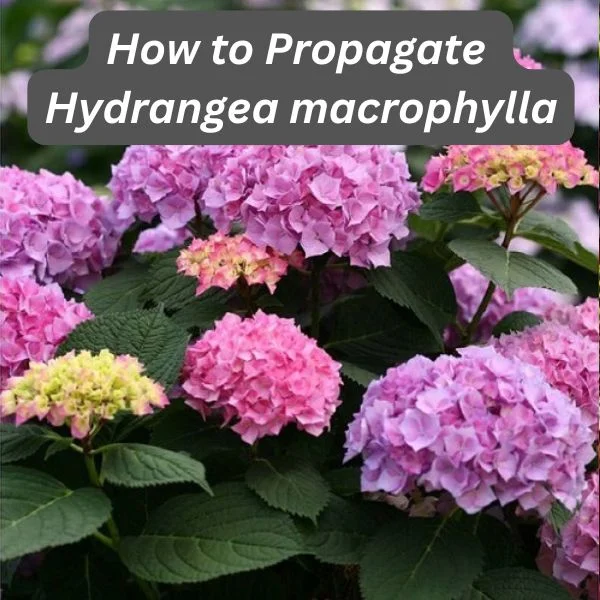
1. Propagating Hydrangea macrophylla from stem cuttings in water
- Take a 4-6 inches long stem cutting from a healthy branch, ensure it has several leaf nodes as this is where new growth will come from.
- Strip off the lower leaves and dip the lower cut end of the cutting in a rooting hormone to promote rooting.
- Submerge 2-3 inches of the cutting in a jar of plain water or in a propagation station. Ensure to submerge at least 2-3 inches of the cutting as this is where roots will grow from.
- Place the set up in a warm, well-lit spot away from direct sunlight.
- Change the water every 5-7 days to prevent bacterial and fungal growth.
- When a good amount of roots have formed on the cuttings, transfer the cuttings into individual pots in moist potting soil.
- Position the pots in a warm, well-lit place away from direct sunlight to prevent scorching.
- Maintain the soil moist until new growth has emerged and substantial growth has been observed.
- Transfer the new plant into a pot 1 size larger in well-drained soil afterwhich you can begin routine care.
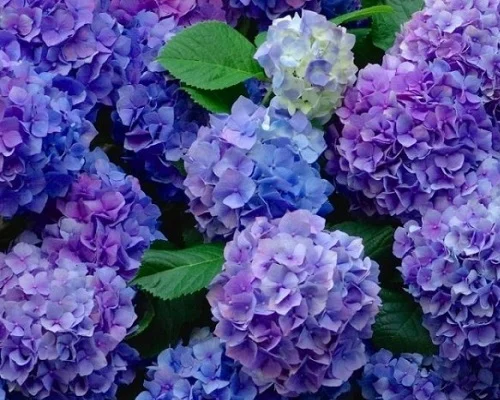
2. Propagating Hydrangea macrophylla from stem cuttings in soil
- Take a stem cutting of about 4-6 inches from a healthy plant and ensure each cutting has at least 2 nodes.
- Dip the lower cut end cutting in a rooting hormone to hasten rooting.
- Fill the container with free-draining, potting mix and make a hole in the center. Ensure that the hole is slightly wider than the base of the stem cutting.
- Insert about 2-3 inches of the lower cut end of the cutting in the previously made hole and lightly firm the soil around the cutting while taking care not to bury it too deep.
- To hasten rooting of the cutting, create a mini-greenhouse by covering the set up with a clear polythene sheet or bag.
- Ensure the leaves of the cutting do not touch the sheet or bag too much by propping it up with sticks.
- Place the set up in warm, well-lit spot away from direct sunlight to avoid scorching.
- Maintain the soil moist through out until new growth emerges; new growth indicates the cutting has rooted. In about 3-5 weeks, rooting of the cutting will have taken place.
- Gradually over a period of two weeks, remove the plastic bag cover to acclimate the new plant to ordinary growing conditions.
- When the new plant is well established, begin normal routine care.
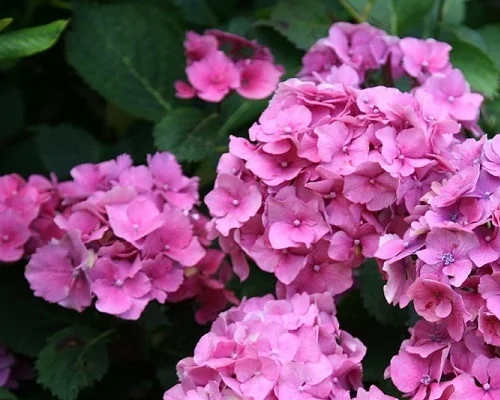
3. Propagating Hydrangea macrophylla by air layering
- Air layering consists of notching the stem of a healthy plant and coating the notch with a rooting hormone to enhance rooting.
- Surround the notched area with damp moss and cover the notch with a polythene film or clear plastic wrap.
- Maintain the moss moist through out and allow some time for roots to develop in the notched area.
- After the roots have formed and about 2 inches long, the stem is now ready to be seperated from the mother plant.
- Sever the stem just below the covered part with a sharp cutting tool like a sterlized knife or a sterilized pair of scissors. New shoots will sprout from the shortened stem of the mother plant.
- Remove the polythene or plastic wrap and get ready to pot the rooted cutting in its individual pot.
- Select a 6 or 8 inches pot and ensure that the pot has a drainage hole to prevent the soil from getting soggy as it can lead to rotting.
- Fill the pot with well-drained soil and make a hole in the center of the pot. Make sure that the hole is slightly wider than the root base of the cutting.
- Place the rooted cutting in the previously made hole and lightly firm the soil around the base of the stem while taking care not to bury it too deep.
- Wet the soil thoroughly and place the set up in a well-lit, warm place until the new plant is well established afterwhich you can begin routine care.
How to care for Hydrangea macrophylla indoors
To care for Bigleaf Hydrangea indoors, give it bright indirect light, warmth of 10-180C, humidity of 50-55% and consistently moist, rich, well-drained soils coupled with fortnightly feeding in spring and summer.
You liked it? Share on social media.
Related Content


Amazon Associates Disclosure
Homeplantsguide.com is a participant in the Amazon Services LLC Associates Program, an affiliate advertising program designed to provide a means for sites to earn advertising fees by advertising and linking to amazon.com.