Black Leg Disease on Houseplants; Causes, Symptoms, Treatment and Prevention
Some links in this post may be affiliate links
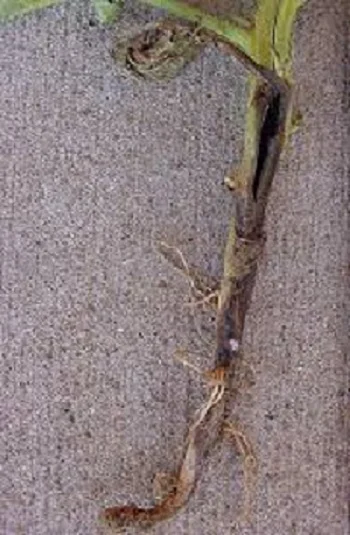
Black Leg Disease Symptoms
Black Leg disease is common in stem cuttings where the base of the cutting turns black. The symptoms manifest as oval, sunken, light-brown to black cankers with purple-to-black margins near the base of the stem. The disease moves fast, destroying the stem and killing the plant, often causing it to topple over.
The cause of Black Leg Disease is bacteria which thrive in waterlogged soil. The predisposing factors for this disease is soggy soil due overcompaction and poor drainage of the soil.
Many plants can be affected by Black Leg Disease but Pelargoniums and stem cuttings are especially susceptible to this disease.
Treatment for Black Leg Disease on Houseplants
- Remove the infected cuttings as soon as possible. Discard the affected cuttings together with their soil to prevent spread to rest of the plants.
- Drench the soil for the healthy cuttings with a fungicidal solution to arrest the situation.
- Keep the healthy cuttings on the drier side for 10-14 days to discourage the disease.
- Improve air circulation and place the cuttings in a warm, well-lit spot.
How to Prevent Black Leg Disease in Houseplants
- Dip the cuttings in a rooting compound that contains a fungicide to minimize the disease occurence.
- Always use clean, sterilized pots, scissors and others. Wash them with a 10% bleach solution.
- Use a sterile, fast-draining, rooting mix and a rooting container with proper drainage to avoid sogginess of the soil.
- Always allow the soil to dry slightly between waterings to avoid overwet conditions which promote the disease.
- Position the cuttings in a warm, brightly-lit place to encourage a healthy growth, as vigorously-growing plants are unlikely to be affected.
- Maintain proper air flow for the cuttings to discourage the disease.
You liked it? Share on social media.
Related Content
Amazon Associates Disclosure
Homeplantsguide.com is a participant in the Amazon Services LLC Associates Program, an affiliate advertising program designed to provide a means for sites to earn advertising fees by advertising and linking to amazon.com.