How to Get Rid of Whiteflies on Houseplants: Whiteflies on Houseplants Treatment
Some links in this post may be affiliate links
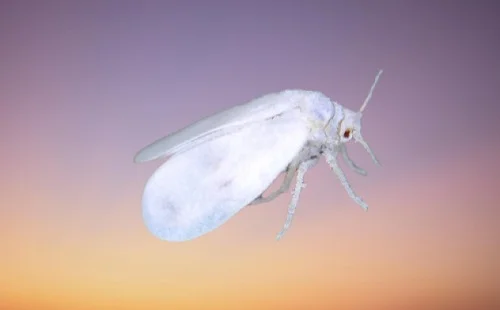
Whiteflies on Houseplants Identification
Whiteflies are tiny, white, moth-like insects which occur in clusters on the underside of leaves of most houseplants. They are sap-sucking insects, which secrete a honeydew sticky substance which attracts ants and a sooty black mold.
Infestation by Whiteflies results in leaves turning yellow and dropping, stunted growth and a sticky, sugary substance on the leaves. Whiteflies are common on Begonia, Fuchsia, Impatiens and Pelargonium.
Whiteflies thrive in warm, poorly-ventilated environments where they reproduce rapidly, often resulting in all the life stages (eggs, nymphs, adults) being present on the plant at the same time. The nymphs and eggs are primarily found on the underside of leaves, often looking like tiny, flat, oval, pale yellow or transparent discs.
How to Treat Whiteflies on Houseplants
- Isolate the affected plant to minimize spread to the rest of the houseplants.
- Discard the heavily infested plant or destroy it to prevent further spread.
- Take the affected plant outside or to a sink and wash off the pests with a high pressure stream of lukewarm water. If the houseplant has delicate foliage, turn it upside down and dip the foliage in a bucket of lukewarm water to wash the pests off. Repeat as necessary to get rid of most of the pests.
- For a light Whiteflies infestation, place sticky insect traps near the plant to catch the pests, as they are attracted to yellow colored objects.
- You can also treat the affected plant with an insecticidal soap or a neem oil which work by suffocating the pests on contact. Ensure to cover the entire plant and to follow the manufacturers recommendations.
- A heavy Whiteflies infestation can be treated by spraying with a Pyrethrin-based insecticide at 3 days interval to minimize the pests infestation.
How to Keep Whiteflies Away from Indoor Plants
- Keep your plants healthy at all times by providing the correct growing conditions as vigorously-growing plants are less likely to be damaged by pests.
- Get your plants from trustworthy sources to avoid introducing these pests to your plant collection.
- Thoroughly inspect new plants before bringing them inside your home and isolate any infested plants until they are pest-free.
- Regularly check the plants for these insect pests between and beneath the leaves and take timely control measures.
- Use Aluminium reflective soil mulch to deter the Whiteflies from attacking the plant.
- Keep the plants properly pruned to remove the breeding and hiding grounds for these pests.
- Maintain the plants growing area clean by removal of fallen leaves and any plant debris as they can harbor the Whiteflies and/or their eggs.
- On a regular basis, clean the leaves to discourage the pests from attacking the plants.
- Improve air flow to minimize Whiteflies infestation as they flourish in warm, poorly-aerated conditions.
You liked it? Share on social media.
Related Content
Amazon Associates Disclosure
Homeplantsguide.com is a participant in the Amazon Services LLC Associates Program, an affiliate advertising program designed to provide a means for sites to earn advertising fees by advertising and linking to amazon.com.