How to Get Rid of Thrips from Indoor Plants: Trips on Houseplants Treatment
Some links in this post may be affiliate links
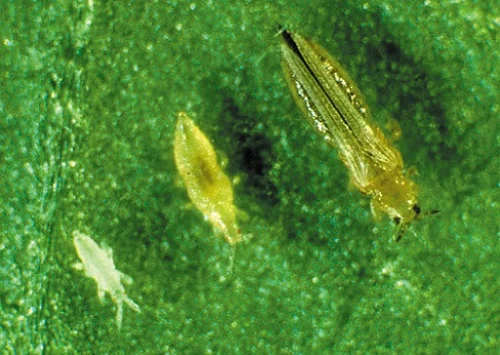
Thrips Identification
Thrips are tiny, black insects which fly or jump from leaf to leaf, causing tell-tale silvery streaks. They feed on the plant sap and a severe infestation can cause dehydration, resulting in wilting and drooping of the leaves. These pests are more prevalent in dry, poorly-ventilated conditions.
Thrips attack the soft growing tissue and cause the worst damage on flowers which become spotted and distorted. They also cause stunted growth, yellowing and leaf loss.
They are difficult to eliminate because they reproduce rapidly and can complete their life cycle in just 2-3 weeks, with the eggs being embedded deep inside the plant tissue where chemical sprays cannot reach. Many houseplants can be infested by thrips but Begonia, Codiaeum and Fuchsia are highly susceptible to these pests.
How to Treat Thrips on Houseplants
- Isolate the affected plant to minimize spread to the rest of the plants.
- Remove heavily infested parts of the plant and destroy to prevent further spread.
- Replace the top 2-3 inches of soil with fresh soil or repot the plant in fresh soil as many Thrips species pupate in the soil.
- Place sticky traps near the plant to catch the adult flying Thrips and keep them from laying eggs in the soil.
- Take the affected plant outside or to a sink and wash off the pests with a high pressure stream of lukewarm water. If the houseplant has delicate foliage, turn it upside down and dip the foliage in a bucket of lukewarm water to wash the pests off. Repeat as necessary to get rid of most of the pests.
- A light Thrips infestation can be treated by wiping off the Thrips with a cotton bud dabbed in a solution of 4 parts water to 1 part rubbing alcohol followed by thorough spraying of the entire plant with the solution. Repeat as necessary.
- You can also treat the infested plant with an insecticidal soap or a neem oil both of which work by suffocating the pests on contact. Ensure to cover the entire plant and to follow the manufacturers instructions.
- Thoroughly spray the affected plant with a systemic Pyrethrin-based insecticide at the first sign of infestation and repeat as necessary. The plant absorbs the insecticide, thereby killing the thrips when they feed on the leaves. Ensure to follow the manufacturer's recommendations.
How to Keep Thrips Away from Houseplants
- Keep your plants healthy at all times by giving them the correct growing conditions as vigorously-growing plants are less likely to be damaged by pests.
- Acquire your plants from trustworthy sources to avoid introducing these pests to your plant collection.
- Thoroughly inspect new plants before bringing them inside your home and isolate any infested plants until they are pest-free.
- Regularly check the plants for these sap-sucking insects between and beneath the leaves and take timely control measures.
- Apply Diatomaceous Earth on the soil surface and around the base of the plants, to deter and kill the Thrips.
- Keep the plants well-pruned to remove the breeding and hiding grounds for these pests.
- Maintain the plants growing area clean by removing fallen leaves or other plant debris as they can harbor the Thrips and/or their eggs.
- On a regular basis, clean the leaves to discourage the pests from attacking the plants.
- Raise humidity and improve air flow to minimize Thrips infestation as they flourish in dry, poorly-aerated conditions.
You liked it? Share on social media.
Related Content
Amazon Associates Disclosure
Homeplantsguide.com is a participant in the Amazon Services LLC Associates Program, an affiliate advertising program designed to provide a means for sites to earn advertising fees by advertising and linking to amazon.com.